
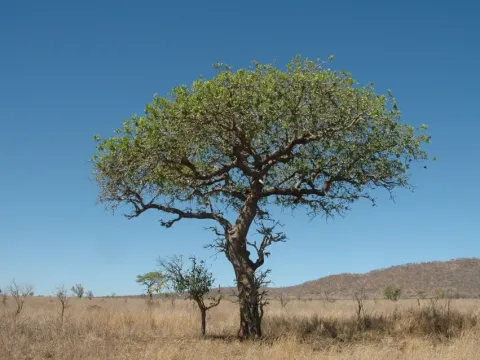
Poupartia birrea
Poupartia birrea
Poupartia birrea, scientifically known as Sclerocarya birrea (Marula), is propagated primarily through seeds. Due to the hard endocarp of the stone, seeds require scarification or soaking in warm water to break dormancy and ensure consistent germination rates.
What the section contains
Poupartia birrea
In nursery settings, it is crucial to use well-drained, sandy-loam potting mixes. Overly dense substrates can lead to waterlogging, which often results in damping-off diseases that destroy young, vulnerable seedlings during their initial growth phase.
Germination typically occurs when temperatures are sustained between 25 and 30 degrees Celsius. Maintaining consistent but moderate soil moisture is key to successful development until the taproot is well-established.
As this species is dioecious, farmers must account for the gender distribution of their trees. Planting a sufficient ratio of male trees to female trees is mandatory to facilitate effective cross-pollination by wind and insects.
Young plants require protection from intensive direct sunlight and browsing animals during their first two years. Gradually hardening them off before transplanting into the permanent orchard site improves survival rates.
This species belongs to the Anacardiaceae family and is highly adapted to tropical savannas. It thrives in regions with distinct wet and dry seasons, showing remarkable resilience to prolonged water stress.
The tree performs best in deep, well-drained soils. While it is tolerant of poor soil fertility, it struggles in waterlogged areas where root systems are susceptible to fungal colonization and subsequent decay.
Abundant solar radiation is essential for the tree's health and fruit quality. Orchards should be designed to prevent canopy overlap, ensuring that all leaf surfaces receive adequate sunlight for photosynthesis.
Marula is sensitive to frost, which limits its commercial cultivation to frost-free tropical or subtropical zones. Any temperature drop below freezing can cause severe damage to the vascular tissue of the trunk and branches.
Proper field management includes maintaining a clear buffer zone around the tree base to reduce competition with weeds and grasses, which can otherwise rob young trees of vital nutrients and moisture.
Yield capacity of a mature Marula tree is substantial, often ranging from 50 to 500 kilograms of fruit per tree, depending on local environmental factors, tree genetics, and the age of the specimen.
The fruit is a drupe with a succulent, vitamin C-rich flesh surrounding a hard stone. Harvesting usually occurs when the fruit reaches its peak maturity and naturally detaches from the branches.
The economic value extends beyond the flesh to the seeds, which are housed within the hard stone. These kernels are highly prized for their oil, which is used extensively in both gourmet culinary and high-end cosmetic industries.
Growers should note that the tree has a long juvenile period, typically taking between 6 and 10 years to reach the first significant commercial fruiting stage, requiring long-term planning.
Strategic pruning techniques, such as opening the crown, can enhance light penetration into the center of the tree, which is proven to stimulate more uniform fruit production throughout the canopy.
The primary threats to Marula production include specialized fruit flies and weevils that lay eggs in developing fruit. Integrated pest management, including the use of traps, is the most sustainable approach to damage reduction.
Fungal pathogens such as leaf spot are frequently observed in regions with high atmospheric humidity. Maintaining good orchard hygiene by removing dead plant material helps curb the spread of spores.
Herbivores and large mammals represent a significant challenge as they frequently damage bark, leading to secondary infections. Using physical barriers like wire mesh is often necessary for young, vulnerable plantations.
Improper irrigation management is the most common cause of root rot caused by Fusarium species. Once established in the soil, these pathogens are difficult to manage, making preventative soil health maintenance essential.
Regular sanitation, including the removal of infected branches, ensures that the orchard remains productive and resilient against seasonal outbreaks of common savanna tree pests.
Harvesting timing is critical because the fruit is highly perishable and undergoes rapid fermentation once it reaches the ground. Collection must occur daily to maintain the quality required for processing.
Due to the high moisture content and sugar levels of the pulp, harvested fruit must be processed into juice, puree, or liqueur within 24 to 48 hours to prevent spoilage and quality degradation.
The processing workflow involves depulping the fruit, followed by the secondary processing of the stones. The stones are sun-dried until the moisture content is low enough for efficient long-term storage.
Extracting the kernels from the hardened stones is a labor-intensive step. On a commercial scale, mechanical cracking systems are employed to maximize the yield of high-quality oilseeds.
Finished goods, particularly the cold-pressed oil, have a long shelf life and are easily exported, representing the most stable segment of the global market for this multipurpose tropical crop.