
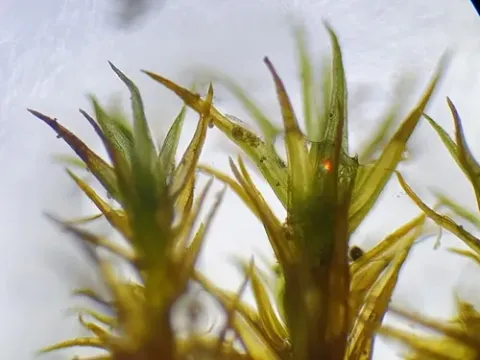
Didymodon
Didymodon
Didymodon is a significant genus of acrocarpous mosses belonging to the Pottiaceae family. These plants are known for forming compact, often dense cushions or mats that thrive in diverse environments across the globe.
What the section contains
 Didymodon acutus
Didymodon australasiae
Didymodon australasiae
Didymodon acutus
Didymodon acutus
Didymodon australasiae
Didymodon australasiae
 Didymodon fallax
Didymodon fallax
Didymodon fallax
 Didymodon glaucus
Didymodon glaucus
Didymodon glaucus
 Didymodon icmadophilus
Didymodon icmadophilus
Didymodon icmadophilus
 Didymodon insulanus
Didymodon insulanus
Didymodon insulanus
 Didymodon nicholsonii
Didymodon nicholsonii
Didymodon nicholsonii
 Wavy-leaved beard-moss
Didymodon sinuosus
Wavy-leaved beard-moss
Didymodon sinuosus
Didymodon
Geographically, these mosses have a cosmopolitan distribution. They are frequently found in open habitats, including mountainous regions, woodlands, and urban areas where they colonize walls, roadsides, and limestone substrates.
The botanical profile of Didymodon is marked by lanceolate leaves that often feature strong, well-defined costa. This structure is an evolutionary adaptation that allows the plant to manage water loss effectively during dry periods.
The genus displays a strong preference for neutral to alkaline soils. It is particularly adept at colonizing nutrient-poor or rocky substrates, acting as a pioneer species that prepares the surface for future colonizers.
While not a traditional agricultural crop, Didymodon serves an essential ecological function. It contributes to soil stability, prevents surface erosion, and helps maintain humidity levels in its immediate micro-environment.
Primary threats to Didymodon colonies include heavy soil pollution and the runoff of herbicides from agricultural lands into adjacent areas.
Alterations in soil pH levels, particularly acidification, significantly limit the growth range of this genus, leading to competitive exclusion by acid-tolerant mosses.
Mechanical disturbance remains a constant risk; intense livestock grazing or heavy human foot traffic can fragment the dense mats, slowing down the regeneration process.
Extreme climate variations, such as prolonged drought followed by flash flooding, can lead to the displacement of moss cushions from their primary substrate.
Pathogenic fungi can emerge in stagnant, overly saturated environments, potentially causing localized rot and the subsequent loss of the photosynthetic surface area.