
Prophet's cucumber
Cucumis prophetarum
Description
Sowing dates
Prophet's cucumber is a drought-tolerant annual plant from the Cucurbitaceae family, which reproduces via self-seeding in its natural environment. For commercial or home cultivation in temperate climates, seeds should be sown after stable warm weather is established, as the culture is highly sensitive to frost.
The optimal time for sowing in open ground is late May, when the soil warms up to at least 18-20 degrees Celsius. Seeds have high germination energy if sufficient moisture is present during the initial phase, but they require minimal watering once seedlings emerge.
When starting indoors, seeds should be sown in peat pots 3–4 weeks before the expected planting date. This allows the plant to adapt to external conditions more quickly and prevents damage to the root system, which is quite fragile in this species.
The planting scheme should provide enough distance between plants, as Cucumis prophetarum forms creeping stems capable of covering a large area quickly. The recommended planting density is no more than two plants per square meter.
For successful growth in non-native environments, it is crucial to ensure maximum light exposure. This culture does not tolerate shading, so choosing a sunny location is a decisive factor for the development of a healthy plant habit.
Growing requirements
This species originates from the arid regions of Africa and the Arabian Peninsula, which has predetermined its high adaptability to extreme temperatures. The plant excellently withstands direct sunlight and long periods without precipitation.
Cucumis prophetarum is not demanding regarding soil conditions; however, it prefers light, sandy or loamy soils with good drainage. Waterlogging is fatal to this crop, as it provokes rotting of the root collar and rapid development of fungal diseases.
The plant thrives in soils with a neutral or slightly alkaline reaction, which is common in its natural habitats. In garden cultivation, heavy clay soils should be avoided or improved by adding sand before planting.
A key requirement is moderation in watering, especially during the fruit-setting period. Excessive moisture leads to a decrease in ornamental appeal and worsens the overall condition of the plant, making it vulnerable to pathogens.
Fertilization should be minimal; preference is given to phosphorus-potassium fertilizers to stimulate flowering. An excess of nitrogen promotes vigorous vegetative growth at the expense of the specific prickly fruits, which are the main aesthetic value of the species.
Main diseases and pests
A typical threat to the Prophet's cucumber is powdery mildew, which occurs during sudden temperature fluctuations and high air humidity. The disease manifests as a whitish coating on the leaf blades, which spreads rapidly across the plant.
Root rots pose a significant danger when the watering regime is disrupted or if cold water is used for irrigation. For prevention, it is important to maintain ventilation, especially if the plant is grown in a greenhouse or container.
Among pests, melon aphids and spider mites are most common, as they actively develop in dry and hot weather. These insects suck sap from the leaves, leading to deformation and premature drying of the foliage.
Attacks by seed-corn maggots are also possible during the seed germination phase. Using high-quality planting material and disinfecting the soil before sowing significantly reduces the risk of damage by young larvae.
- Prevention of fungal infections with fungicides.
- Regular inspection of the leaf undersides for pests.
- Timely removal of infected plant parts.
Harvesting
The economic use of the Prophet's cucumber is limited to its ornamental and biological properties, as the fruits are considered inedible and contain bitterness. Harvesting is carried out exclusively for decorative purposes or for use in floral design.
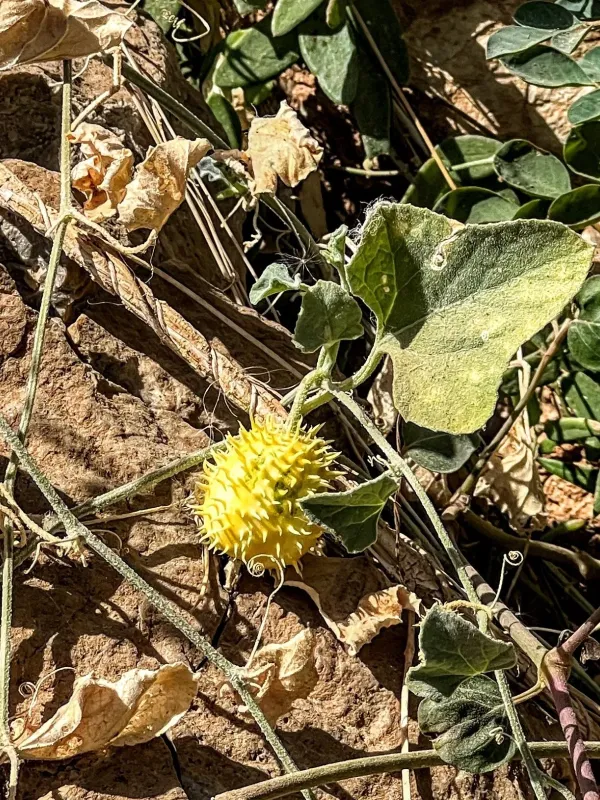
It is recommended to harvest after full ripening, when the fruits acquire a characteristic bright yellow color with pronounced green stripes. During this period, the rind becomes hard, ensuring long-term preservation of the fruit.
Fruits should be cut with pruning shears along with a small portion of the stalk to avoid premature skin damage. After harvest, they must be dried in a well-ventilated room to prevent the formation of mold.
In folk medicine of certain regions, the fruits of this plant have historically been used for specific external applications, though their toxicity requires great caution. The crop is not considered a food-producing agricultural plant.
To preserve the seed stock, fruits are left on the plant until the vines completely dry out. Seeds are extracted from ripened cucumbers, washed of pulp, and stored in a dry, dark place until the next sowing season.