
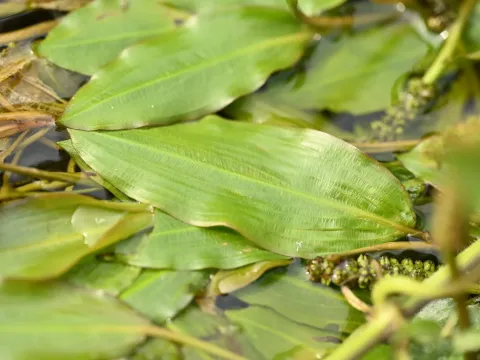
Wright's pondweed
Potamogeton wrightii
Wright's pondweed (Potamogeton wrightii) is a perennial aquatic plant belonging to the Potamogetonaceae family. It is a true hydrophyte, perfectly adapted to environments such as stagnant or slow-moving freshwater systems.
What the section contains
Wright's pondweed
The plant features a robust root system that anchors firmly into the sediment. Its long, branched stems extend throughout the water column, allowing it to efficiently extract necessary nutrients from the surrounding environment.
Successful cultivation requires silty or clay-rich bottom substrates, which typically contain high levels of organic matter. The water pH should ideally be neutral or slightly acidic to support active metabolic functions.
Water temperature is a critical factor for growth; the species shows optimal development when temperatures range between 18 and 25 degrees Celsius. Sufficient water clarity is essential to ensure that sunlight reaches the deeper layers of the vegetation.
Management practices involve precise control of water levels and regular monitoring of the nutrient composition of the bottom sediments to ensure consistent growth throughout the active growing season.
The agricultural importance of Wright's pondweed is primarily focused on aquaculture and fish farming. The plant serves as an essential component of the diet for various herbivorous fish species, providing both shelter and nutrition.
Under favorable environmental conditions, the crop is capable of producing significant biomass. Yield output is directly influenced by the density of the initial planting and the availability of solar energy within the water.
Harvesting is typically carried out using mechanized harvesters mounted on floating platforms. The plant's ability to regenerate rapidly allows for multiple harvest cycles within a single growing season.
Beyond fish farming, the harvested biomass can be utilized as a high-quality green manure. Due to the plant's ability to accumulate microelements from the water, it is highly valued for enriching soil health after composting.
Implementing this crop can lead to substantial reductions in feed costs for commercial aquaculture, providing a sustainable and cost-effective source of essential plant proteins and vitamins.
The primary biological threat to Wright's pondweed is the excessive growth of epiphytic algae, which settle on the leaves and inhibit photosynthesis. This competition for light can lead to the overall decline of the aquatic stand.
Pests, such as various aquatic insect larvae and snails, can cause mechanical damage to leaf tissues. These wounds often facilitate the entry of pathogenic fungi, leading to disease progression and plant decay.
Environmental factors, particularly changes in water chemistry due to runoff or pollution, represent significant risks. Elevated concentrations of chemicals can inhibit growth or cause sudden die-offs across the production area.
Fungal diseases, including rusts, are most prevalent in areas with poor water circulation. Stagnant conditions create the perfect environment for pathogen proliferation, which can quickly compromise the health of the entire crop.
To mitigate these risks, agronomists emphasize the importance of regular water quality testing, maintaining proper flow rates, and managing the density of aquatic vegetation to prevent overcrowding.