
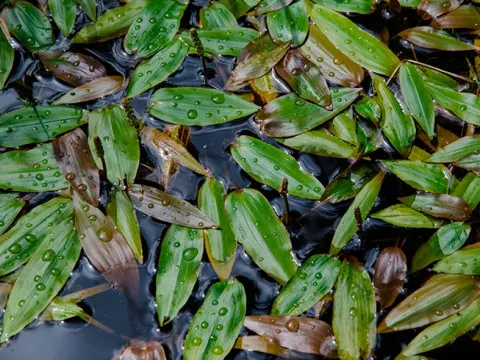
Floating pondweed
Potamogeton fluitans
Floating pondweed (Potamogeton fluitans) belongs to the Potamogetonaceae family and is a robust perennial aquatic plant found in temperate regions across the globe.
What the section contains
Floating pondweed
The plant thrives in freshwater habitats, including ponds, lakes, and slow-moving rivers, preferring nutrient-rich silt or sandy-silt substrates at the bottom of the water body.
It displays heterophyllous leaves, characterized by floating leathery elliptical leaves and submerged elongated lanceolate leaves, which is a unique physiological adaptation.
Optimal growth occurs at water depths between 0.5 to 2.0 meters, requiring high levels of solar exposure for the photosynthesis of the surface-floating foliage.
Agronomic management requires monitoring water clarity, as high turbidity significantly hinders the development of the submerged part of the plant, potentially weakening the entire population.
This crop is highly valued in aquaculture, serving as a foundational food source for various herbivorous fish species and as a habitat for aquatic invertebrates.
The plant's biomass production is significant, making it an excellent resource for creating sustainable self-feeding systems within managed fish ponds.
Harvesting strategies involve cutting the excess biomass in late summer, which helps maintain the ecological balance while providing nutrient-rich feed for livestock or composting materials.
In terms of productivity, managed sites show higher yields due to optimized nutrient availability in the sediment, which ensures rapid rhizome colonization of the pond bottom.
Proper harvest management not only provides fodder but also serves to prevent overgrowth, ensuring adequate oxygen levels are maintained for aquatic life during the night.
Fungal pathogens such as Physoderma species pose a constant threat to the health of the foliage, especially in stagnant waters with poor circulation.
Insects like the pondweed beetle (Donacia) can cause severe tissue damage by feeding on stems and leaves, often leading to structural degradation of the plant colonies.
Algal blooms resulting from excessive nutrient loading create unfavorable competition, blocking sunlight and reducing the CO2 availability required for photosynthesis.
Pollution from agricultural runoff, including pesticides and herbicides, can have lethal effects on pondweed populations, leading to rapid decline and loss of biodiversity.
Integrated pest management in aquatic environments focuses on maintaining water chemistry balance and periodically removing affected plant clusters to prevent widespread infection.