
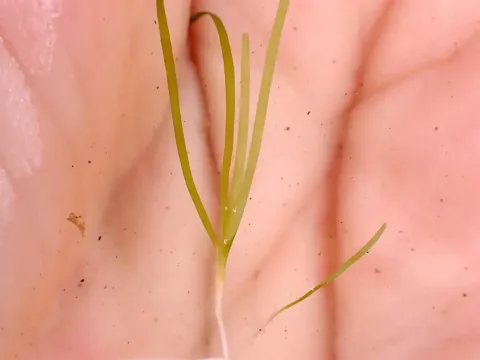
Althenia
Althenia
Althenia is a genus of submerged perennial aquatic plants belonging to the Zannichelliaceae family. These hydrophytes are specialized for life in shallow, brackish, or saline coastal waters, where they form important underwater meadow communities.
What the section contains


Althenia
The morphology of the plant is characterized by slender, thread-like stems and narrow, elongated leaves. This structure is perfectly adapted for absorbing mineral nutrients and gases directly from the water column, allowing the plant to survive in environments with poor nutrient substrates.
Regarding environmental conditions, Althenia requires stable water temperatures and moderate to high light availability for efficient photosynthesis. The plants thrive in calm, sheltered waters where fine sediments accumulate, providing a soft base for their delicate root systems.
The chemical composition of the water, particularly its salinity levels, plays a crucial role in the plant's health. While it can withstand moderate fluctuations, excessive shifts in pH or mineral content can lead to physiological stress and reduced growth rates.
Economically and ecologically, Althenia is valued for its contribution to water purification and habitat complexity. By stabilizing the sediment and providing oxygen, it supports the growth of various aquatic species, including commercial fish fry and beneficial invertebrates.
The primary threat to Althenia populations is water eutrophication, often caused by agricultural runoff containing nitrogen and phosphorus. Increased nutrient levels lead to phytoplankton blooms, which block sunlight and impede the plant's photosynthetic process.
Pest pressure from grazing mollusks and certain herbivorous fish species poses a significant threat to the vegetative biomass. Damage to the stems often makes the plant susceptible to secondary infections by water-borne fungi, which can rot the entire colony.
Hydrodynamic changes, such as those caused by dredging or water management projects, can lead to the erosion of bottom sediments. This destroys the physical foundation required for Althenia to anchor itself, resulting in the uprooting of the plants.
Invasive aquatic weeds present a major competitive challenge, as they grow faster and can outcompete native Althenia for space and nutrients. Controlling these invasive species is essential to maintain the biodiversity of the local aquatic ecosystem.
Effective management strategies should focus on maintaining high water transparency and preventing the accumulation of toxic pollutants. Regular monitoring of the hydrological environment is recommended to protect the health and resilience of these unique aquatic plants.