
Blunt-leaved pondweed
Potamogeton ochreatus
Description
Growing requirements
Blunt-leaved pondweed (Potamogeton ochreatus) belongs to the Potamogetonaceae family. It is a perennial submerged aquatic macrophyte primarily found in freshwater habitats such as lakes, slow-moving rivers, and artificial water reservoirs.
The plant thrives in nutrient-rich substrates, particularly those consisting of silt or fine sand. A steady supply of mineral nutrients from the sediment is essential for its robust growth, especially during the peak of the growing season.
Light intensity is a critical factor for the development of Potamogeton ochreatus. It typically colonizes clear waters where sunlight can penetrate effectively to the bottom, allowing the plant to maintain its metabolic activities and gas exchange.
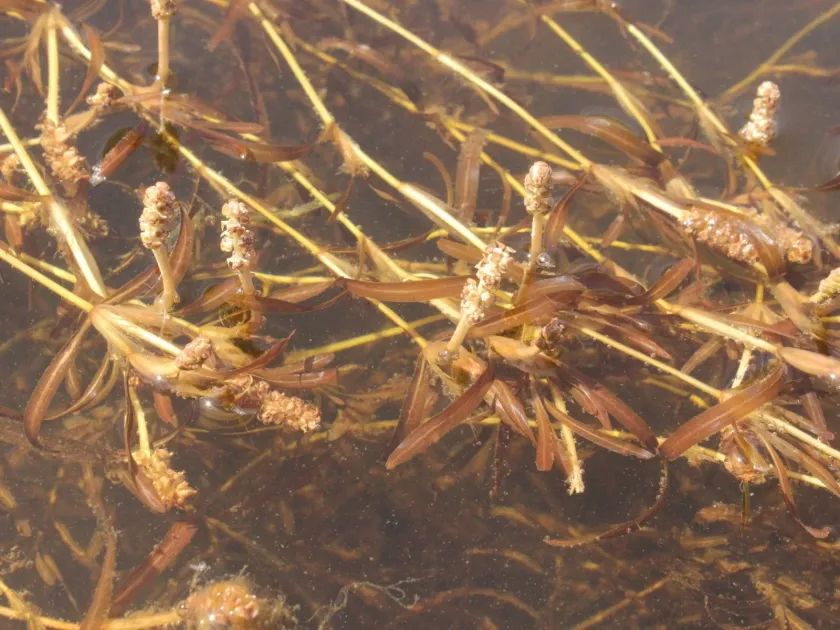
Botanically, this species is defined by its slender stems and linear leaves that possess characteristic stipule sheaths. These sheaths tightly encompass the stem, providing structural support to the plant in flowing water conditions.
In agricultural and pond management, it serves as a valuable bio-indicator and water filter. It efficiently absorbs excess nitrates and phosphates from the water column, which helps prevent unwanted algal blooms in fish farms and managed ponds.
Main diseases and pests
Fungal pathogens represent a significant threat to the health of pondweed colonies, particularly in stagnant, hypoxic environments where decomposition processes are slowed down.
Invertebrate pests, including specific types of caddisflies and moth larvae, can significantly reduce the photosynthetic surface area by grazing on the submerged foliage of the plant.
Excessive siltation can bury the rhizomes of the plant, preventing proper respiration and causing localized mortality within the pondweed stand.
Chemical contamination, particularly from agricultural runoff containing herbicides, poses a severe risk to the survival of Potamogeton ochreatus, as it lacks mechanisms to process synthetic toxins.
Competition from invasive species that grow faster and more aggressively can displace the blunt-leaved pondweed, leading to a decline in biodiversity within the specific aquatic ecosystem.