
Lepilaena
Lepilaena
Lepilaena is a genus of aquatic plants belonging to the family Potamogetonaceae. These plants are primarily native to Australia and New Zealand, where they inhabit shallow freshwater and brackish aquatic environments.
What the section contains
Lepilaena
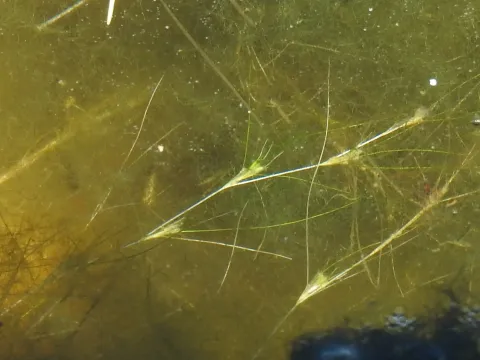
The morphology of Lepilaena is defined by its submerged nature. It possesses slender, thread-like stems and narrow, alternate leaves that are perfectly adapted to remain functional while continuously submerged in water.
This genus requires specific light conditions to survive. Because it is a submerged plant, the clarity of the water is the most critical factor for its development, as sufficient sunlight must reach the lower parts of the plant.
Soil quality is another key requirement. Lepilaena typically thrives in substrates that are composed of fine silt or sandy loam, which provide enough anchoring for its fragile root system and access to mineral nutrients.
Water chemistry plays a vital role in its distribution. While some species are quite resilient to fluctuations in salinity, they generally require stable, clean water conditions, avoiding areas with high levels of industrial or organic pollution.
The most significant threat to Lepilaena populations is eutrophication. Increased nutrient levels from fertilizer runoff cause algal blooms, which shade out the submerged plants and deplete dissolved oxygen levels during the night.
Invasive aquatic weeds present a major competition problem. Rapidly growing non-native species can quickly colonize the habitat, physically displacing Lepilaena and consuming the available light and space.
Sedimentation from land-clearing activities is a chronic stressor. The accumulation of fine suspended solids on the leaf surfaces of the plants inhibits gas exchange and reduces the overall rate of photosynthesis.
Grazing by invasive aquatic fauna, such as carp or other herbivorous fish, poses a direct threat to the vegetative biomass of these plants. High grazing pressure can prevent the plants from completing their life cycle.
Finally, climate-driven changes in water levels can be fatal. If a water body dries up during a peak growth phase, the entire local population of these strictly aquatic plants will perish due to desiccation.