
Opposite-leaved pondweed
Groenlandia
Description
Growing requirements
Groenlandia densa, commonly known as the opposite-leaved pondweed, is a distinctive aquatic plant belonging to the Potamogetonaceae family. It is typically found in clear, calcium-rich flowing waters, reflecting its preference for high-quality aquatic environments.
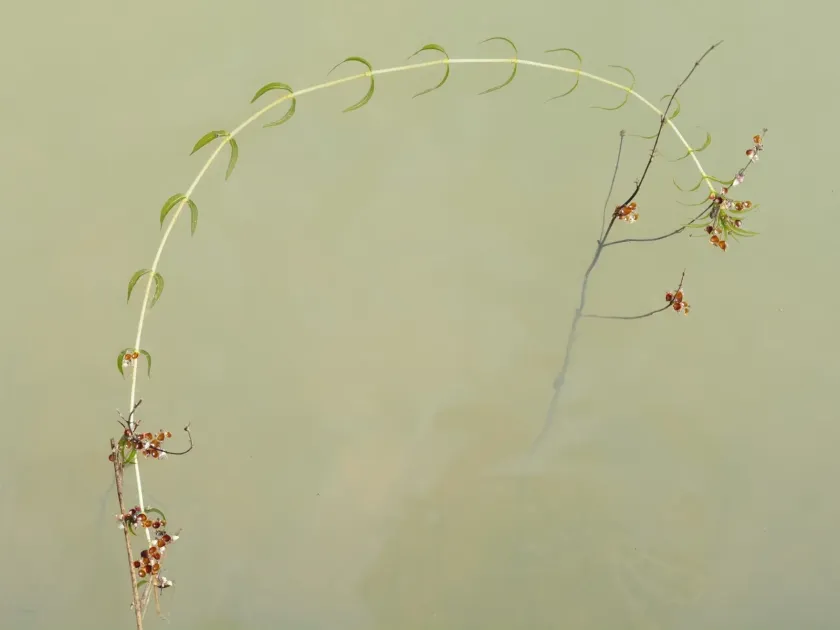
Botanically, the plant is characterized by its stiff, leafy stems and opposite, sessile leaves that are densely packed along the axis. This structure allows the plant to thrive even in moderate currents, providing essential structural complexity to its underwater habitat.
Success in cultivating this species depends on maintaining high water clarity and stable pH levels. It is particularly sensitive to suspended sediments and algae bloom, which can rapidly diminish its photosynthetic capability and overall plant health.
The plant thrives in cool to temperate water conditions. It is not designed for high-temperature tropical environments, as heat stress often leads to rapid decay of the delicate vegetative tissues and a loss of the characteristic dense growth pattern.
For substrate requirements, a nutrient-poor but mineral-rich base like coarse sand or fine gravel is ideal. Supplemental carbon dioxide and light fertilization with essential nutrients in the water column will significantly boost the plant's vigor and growth rate.
Harvesting
Harvesting for propagation or maintenance involves careful trimming of the apical stems. When performed regularly, this pruning encourages the development of lateral shoots, leading to a much fuller and more aesthetically pleasing growth habit.