
Potamogeton miduhikimo
Potamogeton miduhikimo
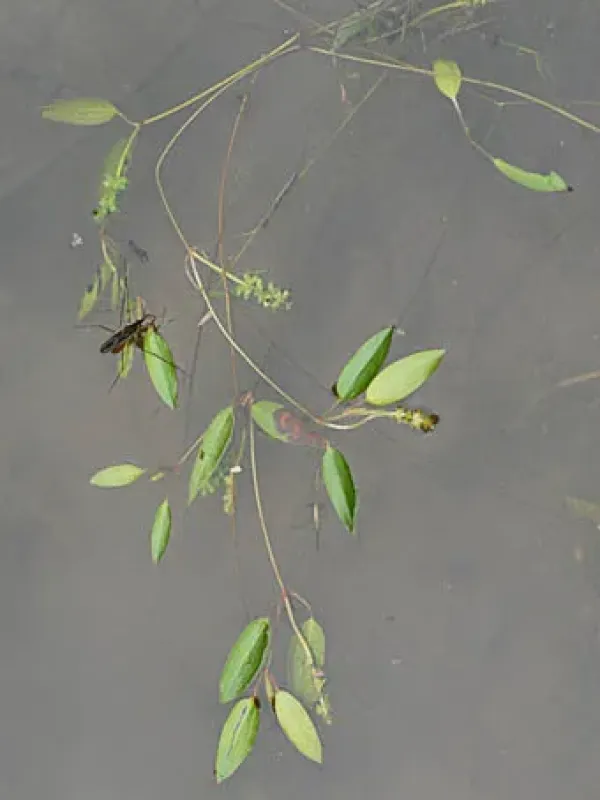
Description
Sowing dates
Potamogeton miduhikimo is a highly specialized aquatic perennial plant belonging to the Potamogetonaceae family. Propagation in its natural habitat occurs primarily through vegetative means, such as fragmentation of rhizomes or shoot development, which dictates the specific "sowing" techniques in aquatic environments.
To introduce this culture, it is necessary to select areas with stable substrate, as the plant requires anchoring in bottom sediments. The optimal time for the start of the vegetative season is spring, when water temperatures consistently exceed 10-12 degrees Celsius.
For industrial-scale cultivation or aquaculture needs, rhizome fragments are planted at a depth of 30 to 80 centimeters. It is crucial to maintain adequate spacing between plantings to prevent competition for nutrients in the benthic layer.
The plant possesses a high capacity for regeneration; therefore, even small segments of shoots can quickly create dense thickets under favorable conditions. This makes the pondweed a promising species for phytoremediation and bottom soil stabilization in artificial ponds.
Agronomic management includes monitoring population density, as excessive growth can impede normal water circulation. Regular maintenance of planting areas contributes to the overall health of the hydrobiological system.
Growing requirements
For successful growth, Potamogeton miduhikimo requires a stable hydrological regime and the presence of mineral-rich bottom sediments. It prefers calm or slow-moving waters where there are no drastic fluctuations in the water surface level.
Light availability plays a key role, as the plant requires clear water for active photosynthesis. Excessive phytoplankton blooms or high turbidity can significantly reduce biomass development rates.
The temperature regime should align with a temperate-warm climate. The plant is capable of enduring winter periods in a dormant state, provided the pond does not freeze to the bottom and the rhizomes remain protected by a layer of silt.
The chemical composition of the water should be neutral or slightly alkaline. High concentrations of organic pollutants can lead to stunted growth, making water quality monitoring an essential element of agronomic practice.
In its natural range, which covers regions of East Asia, the plant is adapted to seasonal variations, making it quite resilient to diurnal temperature fluctuations during the summer season.
Yield
The yield of Potamogeton miduhikimo is measured by the mass of accumulated biomass per unit area of the water surface. Under favorable conditions, biomass growth occurs exponentially, allowing for multiple partial harvests throughout the season.
Commercial use includes employing the crop as a feed base for herbivorous fish and hydrobionts. Dense thickets serve as a natural refuge for fry, which increases the overall productivity of a fish-farming reservoir.
The plant's biomass has good nutritional values, allowing the harvested vegetation to be used as a component of organic fertilizers or compost after preliminary dehydration.
With proper population management, the harvest can reach several tons of wet mass per hectare, making the plant economically significant for ecosystem-based aquaculture.
The harvesting process requires the use of specialized mowers designed for operation in aquatic environments to avoid damaging the root system and ensure rapid regrowth of the culture.
Main diseases and pests
The primary threats to this culture are pathogenic fungi and bacteria that infect stems during stagnant water conditions. The development of mold or decay processes is often linked to disruptions in water circulation.
Pests, such as larvae of certain insect species and aquatic mollusks, can damage leaf blades, reducing the total photosynthesizing area. In some cases, massive infestations of mollusks lead to partial shoot die-off.
Competition from invasive species of higher aquatic plants is a significant risk factor. Aggressive algae species can suppress the pondweed's growth, fully displacing it from the pond ecosystem.
Anthropogenic water pollution with herbicides or heavy metals has a toxic effect, manifesting as chlorosis and premature tissue senescence. Water quality is a determining factor in disease resistance.
- Regular pond aeration to prevent water stagnation.
- Monitoring of pest population density.
- Control over the purity of inlet water.
Harvesting
Harvesting of Potamogeton miduhikimo is conducted using a gentle mowing method for the emergent and near-surface parts of the shoots. This allows for the collection of biomass without disturbing the integrity of the bottom substrate where the rhizomes reside.
The optimal time for harvesting is the phase of intensive vegetative growth before the onset of the shoot die-off period. During this time, the plant is maximally enriched with organic matter.
The harvested mass must be quickly removed from the water to prevent secondary pollution of the reservoir by organic matter during the decay process. Barges or mesh containers are used for transportation.
Further processing includes drying or pressing for use in animal husbandry. In fish farms, a portion of the mowed mass is often left behind to attract feed organisms.
To maintain plantation productivity for the following year, at least 30-40% of the biomass must remain to ensure the resumption of pondweed vegetation in the next cycle.