
Perverse pondweed
Potamogeton perversus
Description
Growing requirements
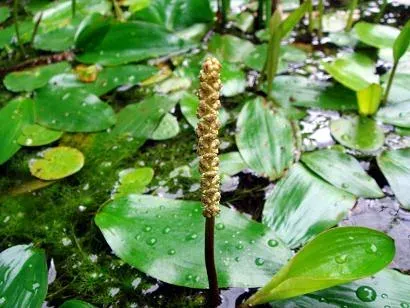
Potamogeton perversus, commonly known as perverse pondweed, is a perennial aquatic plant within the Potamogetonaceae family. This species typically thrives in freshwater environments, ranging from shallow ponds to slow-moving stream ecosystems where it anchors in nutrient-rich sediments.
The botanical structure is defined by long, slender stems and submerged leaves that are highly specialized for underwater photosynthesis. Its rhizomatous root system allows it to remain stable against water currents and facilitates vegetative propagation across the benthic zone of the habitat.
Climatic requirements focus on stable water temperatures during the growing season, typically between 18 and 24 degrees Celsius. The plant requires significant solar penetration, making water clarity one of the most critical factors for its successful development and biomass production.
Regarding soil conditions, this plant prefers fine, organic-rich silt or muddy substrates. It is known to possess significant nutrient uptake capabilities, often acting as a natural filter that helps regulate the chemical balance within aquatic farming systems or reservoirs.
Agricultural management of this crop involves careful water level monitoring and density control. By maintaining appropriate spacing, cultivators can prevent excessive biomass accumulation, ensuring that the water quality remains high while promoting healthy growth of the pondweed population.
Main diseases and pests
Primary threats to the plant include various aquatic fungal infections that emerge when water flow is insufficient, leading to hypoxia. Additionally, local populations of aquatic invertebrates can cause significant damage to the plant's structural integrity during peak reproductive seasons.