
Shining pondweed
Potamogeton nitens
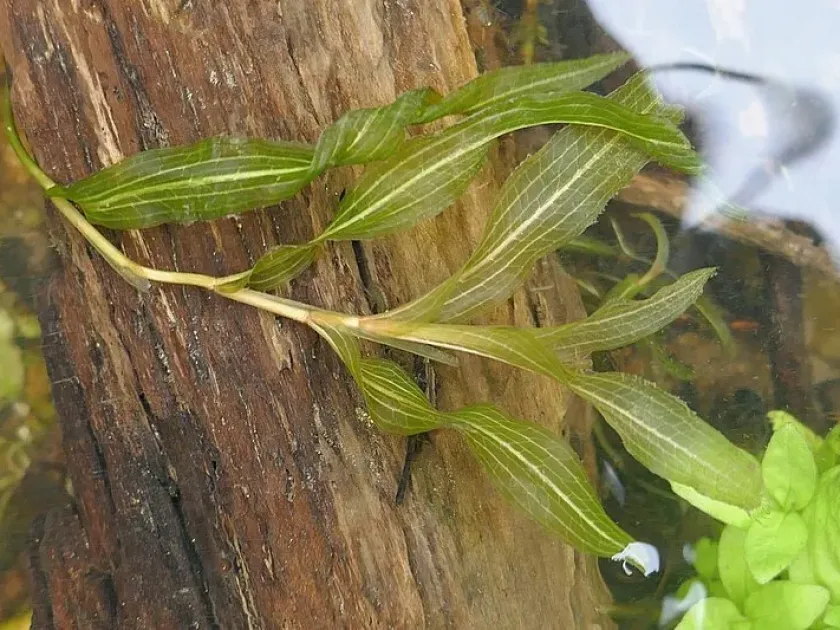
Description
Growing requirements
Shining pondweed (Potamogeton nitens) is an aquatic perennial plant belonging to the Potamogetonaceae family. It is a naturally occurring hybrid known for its robust growth habit in freshwater habitats across the temperate regions of the Northern Hemisphere.
The plant thrives in standing or slowly flowing waters, such as lakes, ponds, and calm river sections. It prefers nutrient-rich substrates, particularly silty or sandy bottoms, which provide necessary anchorage for its well-developed creeping rhizomes.
Regarding environmental conditions, shining pondweed requires moderate light penetration to maintain active photosynthesis throughout the water column. It is highly adaptable to varying water depths, typically growing from 0.5 to 2.5 meters below the surface.
Botanically, it is characterized by distinct, shiny, semi-amplexicaul leaves arranged along elongated, branched stems. These features assist the plant in efficiently absorbing nutrients directly from the water column while maintaining structural integrity in moving water.
From an agricultural and ecological standpoint, this culture is valued for its capacity to improve water quality through natural filtration. It serves as a vital component of the food chain, supporting invertebrate populations and providing essential nursery habitats for various freshwater fish species.
Main diseases and pests
The primary threats to shining pondweed populations include various fungal pathogens that cause leaf spotting and stem rot. These diseases are more prevalent in stagnant, highly eutrophic waters where natural water circulation is compromised.
Insect pests, particularly specialized aquatic larvae, can cause significant herbivory damage. Extensive feeding by these organisms weakens the plant's structural strength and reduces its ability to produce vegetative propagules for the next growing season.
Competition from invasive algal species poses a significant risk. When nutrient levels are too high, algal blooms block essential sunlight, leading to the competitive displacement of pondweed and an overall decline in local biodiversity.
Human-induced disturbances, including mechanical damage from heavy boat traffic or dredging activities, can severely disrupt root systems. This prevents the establishment of dense, healthy beds and can lead to localized extinction of the species.
Management strategies involve maintaining water quality through controlled runoff and ensuring minimal sedimentation. Monitoring for signs of fungal infestation and managing invasive aquatic plant competition are essential steps for sustaining healthy populations in managed water bodies.