
Malay pondweed
Potamogeton malaianus
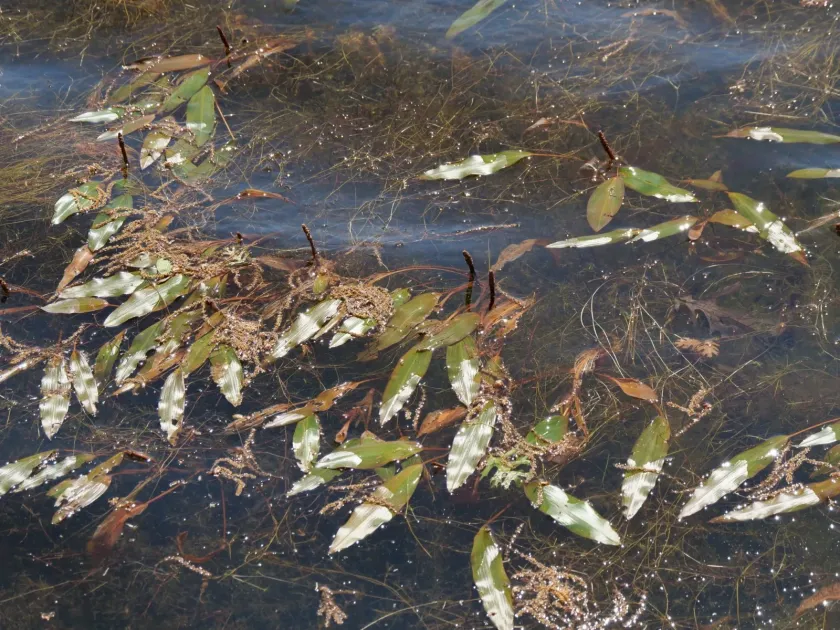
Description
Sowing dates
Malay pondweed (Potamogeton malaianus) belongs to the Potamogetonaceae family. It is a perennial aquatic plant that propagates primarily through the fragmentation of its rhizomes and stems.
The optimal time for establishing a new plantation is during the late spring, once the water temperature stabilizes above 15–18 degrees Celsius.
Planting is achieved by anchoring the rhizomes into the pond bed, ensuring that the plant remains submerged and stable until it develops a sufficient root system.
In large-scale operations, the planting density must be carefully managed to ensure that each plant receives enough nutrients and light for vigorous growth.
The species is known for its rapid colonization capabilities, allowing it to form dense underwater meadows within a relatively short period under suitable environmental conditions.
Growing requirements
Malay pondweed thrives in slow-moving or static water bodies with depths ranging from 0.5 to 2.5 meters, which allows for optimal photosynthetic activity.
It prefers water that is neutral or slightly alkaline, with a good supply of essential minerals and a substrate consisting of silt or sandy loam rich in organic matter.
High water clarity is vital for the health of the plant, as suspended sediments or excessive algae blooms can inhibit its growth by restricting necessary light.
The ideal temperature range for rapid vegetation is between 20 and 28 degrees Celsius; cold conditions will induce dormancy and stop biomass production.
Effective pond management requires regular monitoring of nutrient levels to prevent the pond from becoming eutrophic, which can promote harmful competition.
Yield
The biomass yield of Potamogeton malaianus is highly dependent on the trophic status of the water body and the availability of nitrogen and phosphorus.
Properly managed ponds can produce several harvests per season, as the plant regenerates quickly after being trimmed or partially harvested.
The harvested biomass serves as a high-quality natural feed for herbivorous fish, playing a crucial role in integrated aquaculture systems.
In addition to its use as fodder, the plant is highly valued for its ability to act as a natural water filter, extracting excess nutrients and heavy metals from the water.
Consistent harvest cycles ensure that the plant remains in a vegetative state, preventing it from reaching maturity too quickly and maintaining the quality of the fodder.
Main diseases and pests
Disease outbreaks in Malay pondweed are usually linked to poor water circulation and the accumulation of decaying organic matter, which promotes bacterial growth.
Various aquatic pests, including larvae and herbivorous insects, can cause significant damage to the leaves, reducing the plant's photosynthetic capacity.
The presence of invasive filamentous algae can create intense competition, eventually choking out the pondweed by shading it and depleting local nutrient reserves.
- Infestation by leaf-eating aquatic insects
- Fungal pathogens caused by stagnant water conditions
- Competition from invasive algae species
- Oxygen depletion near the roots due to excessive siltation
Preventative measures include regular maintenance of water flow and selective thinning to ensure adequate gas exchange and prevent unhealthy biomass density.
Harvesting
Harvesting is performed using mechanical cutters mounted on shallow-water boats or floating platforms, which allow for efficient trimming without disturbing the pond bottom.
The best time to harvest is during the peak of the growing season when the stems are young, tender, and rich in the nutrients required by livestock.
Once removed from the water, the biomass should be processed immediately for feed to maintain its nutritional integrity and prevent rapid spoilage.
Care must be taken to leave enough rhizome material to facilitate rapid regrowth, ensuring the long-term sustainability of the aquatic crop.
Mechanical harvesting significantly reduces labor costs and allows for the precise management of pondweed density across large industrial water areas.