
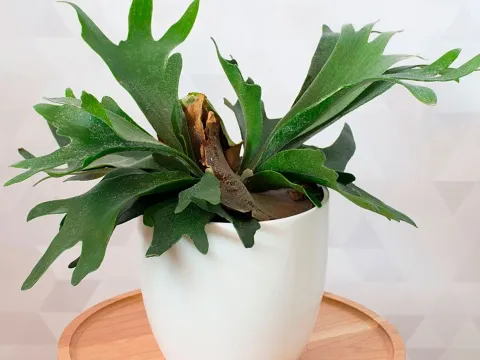
Platycerium
Platycerium
Platycerium, commonly known as the staghorn fern, belongs to the family Polypodiaceae. It is a unique epiphytic genus native to tropical regions of Africa, Southeast Asia, and Australia, typically found growing on tree branches in dense rainforests.
What the section contains
 Platycerium coronarium
Platycerium coronarium
Platycerium coronarium
 Platycerium grande
Platycerium grande
Platycerium grande
 Platycerium hillii
Platycerium hillii
Platycerium hillii
 Platycerium hybrid
s
Platycerium hybrid
Platycerium hybrids
 Platycerium quadridichotomum
Platycerium quadridichotomum
Platycerium quadridichotomum
 Veitch's Staghorn Fern
Platycerium veitchii
Veitch's Staghorn Fern
Platycerium veitchii
Platycerium
Botanically, these plants exhibit distinct dimorphism: sterile fronds that form a shield to collect organic matter, and fertile fronds that resemble the antlers of a deer. Their root systems are quite compact, adapted for anchorage rather than nutrient extraction from soil.
To ensure healthy growth, they require a well-draining, airy substrate composed of pine bark, sphagnum moss, and charcoal. They thrive in temperatures between +18 and +25 degrees Celsius, requiring a balance of warmth and high ambient humidity.
Proper cultivation involves the soak method rather than traditional watering, which prevents damage to the sensitive frond structure. Maintaining indirect but bright light conditions is crucial for the photosynthesis of their characteristic fronds.
The primary horticultural use for Platycerium is within ornamental botany, where it is highly valued for vertical wall displays and botanical greenhouse installations. Its ability to thrive as an epiphyte makes it a popular choice for indoor architectural design.
Scale insects are among the most common pests affecting Platycerium. They appear as small, hard brown bumps on the fronds and can significantly stunt the growth of the fern if left untreated.
Root rot remains the most significant threat to the plant's health, typically caused by overwatering or a lack of proper drainage. Once the root system begins to decay, recovery becomes difficult for this species.
Spider mites frequently attack the fronds during low-humidity conditions, causing the tissue to appear mottled or yellowed. Increasing the humidity levels and regular cleaning of the leaves can prevent these infestations.
Mealybugs are another potential threat, often hiding in the crevices of the shield fronds. These pests should be addressed immediately using specialized pesticides or manual removal with alcohol-soaked swabs.
Maintaining overall plant hygiene by removing dead debris and ensuring constant air circulation is vital for pest prevention. Always monitor for signs of distress and adjust the irrigation schedule if signs of infection emerge.