
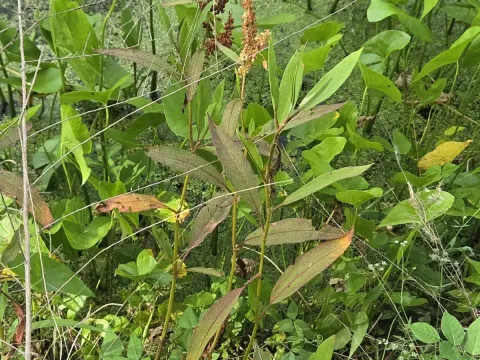
Swamp dock
Rumex verticillatus
Swamp dock (Rumex verticillatus) is a perennial herbaceous plant belonging to the Polygonaceae family. It is typically found in moist, riparian environments, though it can be cultivated in controlled agricultural settings as a niche green crop.
What the section contains
Swamp dock
Sowing should take place in early spring once the soil is workable or in late autumn before the first frosts. Seeds are small and should be sown at a shallow depth of approximately 1 to 2 centimeters to ensure successful germination.
For commercial-scale production, row spacing of 25 to 30 centimeters is recommended. This spacing allows for proper aeration and facilitates mechanical weeding, which is vital during the establishment phase.
The seeds require consistent moisture to germinate, often taking 14 to 21 days depending on soil temperature. Soil temperatures between 10°C and 18°C are considered optimal for seed development.
Once established, the plant develops a robust taproot system that allows it to survive for multiple years, provided the soil remains sufficiently moist and fertile throughout the growing period.
This crop thrives in heavy, moisture-retentive soils such as loams or silty clays. It is notably tolerant of temporary flooding, which is why it is naturally adapted to wetland areas or low-lying agricultural fields.
Soil pH should ideally be near neutral, although the plant shows some adaptability to slightly acidic conditions. If soil is too acidic, liming prior to planting can improve overall plant vigor and biomass yield.
Swamp dock requires high water availability. In dry climates or periods of low rainfall, supplementary irrigation is essential to prevent the plant from bolting early, which significantly decreases leaf quality.
Exposure to full sunlight is preferred for maximum leaf production, although the plant is capable of growing in partial shade, which can actually help keep the leaves tender during hot summer months.
Fertilization with nitrogen-rich organic matter or balanced fertilizers is beneficial in early spring to stimulate the rapid production of new leaves, ensuring high-quality yields throughout the harvest season.
Common threats to swamp dock include the dock leaf beetle, which feeds on the foliage. Heavy infestations can lead to significant biomass loss if not managed with timely biological or mechanical interventions.
Fungal diseases like downy mildew and leaf spot are common in humid conditions or where there is poor air circulation between plants. Proper spacing and the removal of infected debris are key preventive measures.
Aphids can occasionally colonize the underside of the leaves during drought conditions, leading to leaf curling. Maintaining healthy soil moisture is a practical way to keep the plants resistant to such pests.
In cases of severe infection, localized application of horticultural soap or organic pesticides may be used, provided that pre-harvest intervals are strictly observed to ensure food safety.
Crop rotation every 4 to 5 years is recommended to break the life cycles of soil-borne pathogens and pests, which can build up in long-term perennial plantings if left unmanaged.
Harvesting usually begins when leaves reach a usable size of 10 to 15 centimeters. Leaves should be cut carefully, leaving the crown of the plant intact to allow for rapid regrowth for subsequent cuts.
Depending on the climatic conditions and fertilizer application, multiple harvests are possible within a single growing season. Each harvest should be followed by a light watering to aid in plant recovery.
It is important to harvest before the plant initiates its reproductive phase. Once flowering stalks emerge, the leaves become tougher and more acidic, reducing their culinary and market value.
Post-harvest handling is critical, as the leaves tend to wilt rapidly. Storing them in a cool, humid environment shortly after collection helps maintain their freshness and nutritional content.
At the end of the season, cleaning the bed of dead foliage and organic waste is good practice to prevent the overwintering of pathogens and to prepare the plant for dormancy during the winter months.