
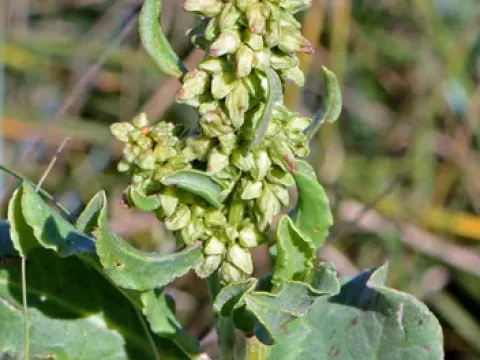
Shrubby dock
Rumex frutescens
Shrubby dock (Rumex frutescens) is a perennial plant belonging to the Polygonaceae family, native to the temperate and subtropical regions of South America. It is recognized for its robust, shrub-like growth pattern.
What the section contains
Shrubby dock
The crop thrives best in well-drained, fertile soils with a pH ranging from slightly acidic to neutral. Consistent moisture is essential for optimizing leaf production, as the plant is sensitive to prolonged drought periods.
Climate preferences include temperate environments with adequate sun exposure. While it is somewhat adaptable, exposure to harsh, extreme frosts can limit the longevity of the plant's rosette in colder regions.
Standard agronomic practices involve maintaining soil aeration through regular hoeing and utilizing balanced fertilizers to support the rapid development of foliage during the main growing season.
Beyond agricultural food production, the plant serves environmental purposes, including soil stabilization due to its extensive root system, and can be used as a source of biomass in specific ecological settings.
The primary pathological threats include fungal infections such as rust and downy mildew, which flourish under conditions of high humidity and poor ventilation among the foliage.
Pest populations, particularly leaf-eating beetles and aphids, are common challenges that necessitate vigilant scouting and early intervention to prevent significant yield losses.
Effective management strategies incorporate sustainable crop rotation practices, ensuring that the field is not replanted with members of the same family consecutively to break pest cycles.
Sanitation measures, including the destruction of infested plant tissue and regular weeding, are fundamental to reducing the initial inoculum of common field pathogens.
Integrated pest management (IPM) techniques should be prioritized to maintain the ecological balance of the site and ensure the safety of the harvested material for potential consumers.