
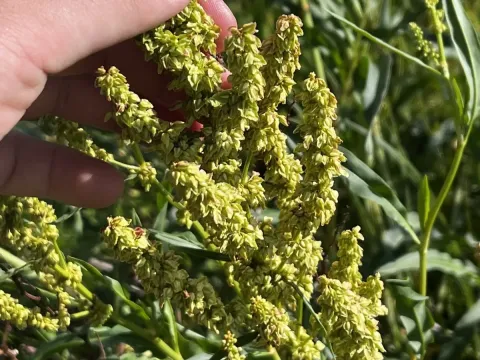
Triangular-valved dock
Rumex triangulivalvis
Triangular-valved dock (Rumex triangulivalvis) is a perennial herbaceous plant belonging to the Polygonaceae family. In the context of agronomy, it is often classified as a weed species that can infest various agricultural landscapes, pastures, and disturbed soil areas.
What the section contains
Triangular-valved dock
The plant exhibits high ecological flexibility, allowing it to colonize habitats with varying soil moisture levels. It thrives in sunny environments where deep, nutrient-rich soils provide optimal conditions for its vigorous root system to establish and expand over time.
Morphologically, Rumex triangulivalvis is characterized by a strong taproot, which helps the plant survive mechanical soil disturbances and temporary droughts. The leaves are generally lanceolate, and the plant produces distinct triangular valves on its fruits, which is a key identification feature.
Effective management of this plant requires a combination of cultural practices and chemical control. Crop rotation and competitive planting are essential to shade out seedlings, while deep plowing can help disrupt the vertical growth of the established taproot systems.
The species is highly prolific, producing numerous seeds that can remain viable in the seed bank for several years. Therefore, controlling the plant before it sets seed is crucial for maintaining low population levels within the agricultural ecosystem and surrounding fields.
Various pests, including leaf-feeding beetles and aphids, are known to inhabit the plant. While they may cause localized damage to the foliage, these insects often use the plant as a refuge, potentially spreading to adjacent crops during the growing season.
Pathogen-wise, the plant is susceptible to various rust fungi and leaf spot diseases. These fungal infections can persist on the plant debris, acting as a perennial source of inoculum that can infect susceptible commercial crops if sanitation measures are ignored.