

Reference · Crops
Sorrel
Rumex L.
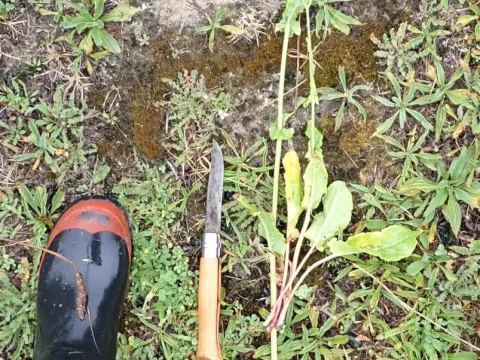
Sorrel (Rumex L.) is a perennial herbaceous plant belonging to the Polygonaceae family. It is typically sown in early spring as soon as the soil can be worked, as the seeds require cool conditions to germinate effectively.
13
items
What the section contains
 Curly dock
Rumex crispus L.
2 products
Curly dock
Rumex crispus L.
2 products
 Bladder dock
Rumex vesicarius L.
Bladder dock
Rumex vesicarius L.
 Broad-leaved dock
Rumex obtusifolius L.
Broad-leaved dock
Rumex obtusifolius L.
 Clustered dock
Rumex conglomeratus Murray
Clustered dock
Rumex conglomeratus Murray
 Common sorrel
Rumex acetosa L.
Common sorrel
Rumex acetosa L.
 Long-leaved dock
Rumex longifolius DC.
Long-leaved dock
Rumex longifolius DC.
 Seaside dock
Rumex maritimus L.
Seaside dock
Rumex maritimus L.
 Sheep sorrel
Rumex acetosella L.
Sheep sorrel
Rumex acetosella L.
 Spinach dock
Rumex patientia L.
Spinach dock
Rumex patientia x Rumex tianschanicus
Spinach dock
Rumex patientia L.
Spinach dock
Rumex patientia x Rumex tianschanicus
 Tall Dock
Rumex altissimus A. W. Wood
Tall Dock
Rumex altissimus A. W. Wood
 Tianshan sorrel
Rumex tianschanicus A. Los
Tianshan sorrel
Rumex tianschanicus A. Los
 Water dock
Rumex hydrolapathum Huds.
Water dock
Rumex hydrolapathum Huds.
Marketplace
Products in this section · 12


Sorrel
Summer sowing is also possible, usually carried out in June or July, allowing the plants to establish a strong root system and a rosette of leaves before the onset of winter. Fall sowing in late October is another option for early spring production.
Seeds should be sown in rows spaced 20–30 cm apart at a depth of approximately 1.5–2 cm. Following the sowing, the soil should be lightly firmed to ensure good seed-to-soil contact, which is crucial for uniform germination.
Seedlings typically emerge within 10–14 days. Thinning is recommended to provide adequate space for each plant, which prevents overcrowding and improves air circulation, thereby reducing the risk of fungal diseases.
In the first year, the focus is on root and rosette development. High-quality leaves are generally harvested starting from the second year, once the plant has established a healthy perennial rootstock.
Sorrel thrives in fertile, moist, and well-drained loamy or sandy soils. It prefers slightly acidic soil conditions, ideally with a pH level between 4.5 and 5.0, making it well-suited for various garden environments.
As a cold-hardy plant, sorrel can germinate at temperatures as low as 2–3°C. It is capable of surviving light frosts without damage, making it one of the first greens available in the garden after winter.
Consistent moisture is essential for sorrel production. If the soil dries out, the leaves become tough, and the plant is prone to bolting (producing flower stalks), which significantly lowers the culinary quality of the foliage.
The plant prefers full sun but can tolerate partial shade, which may be beneficial in extremely hot climates to prevent premature bolting. Exposure to excessive heat and sunlight often triggers a reproductive phase rather than vegetative growth.
Waterlogged soil or areas with poor drainage should be avoided to prevent root rot during the dormant winter period. Regular weeding is necessary, as sorrel competes poorly with aggressive weeds during its early growth stages.
The yield of sorrel depends heavily on fertilization, moisture management, and the frequency of harvesting. Under optimal conditions, growers can harvest between 1.5 and 3 kg of leaves per square meter per season.
A sorrel patch remains productive for 3 to 4 years. After this period, the plants often become crowded, the leaves grow smaller, and the quality declines, necessitating the establishment of a new plantation.
Applying nitrogen-based fertilizers after each harvest cycle promotes rapid regrowth. This practice is essential for maintaining a high turnover of succulent, high-quality leaves throughout the growing season.
Depending on the region and care, 4 to 5 harvests are possible within a single growing season. It is vital to remove any emerging flower stalks, as they divert energy from leaf production and lead to premature senescence.
With good management, the harvest season can extend into mid-August. Beyond that, the plant should be left to accumulate nutrients in its roots to ensure successful survival through the winter dormancy.
The most significant pest is the sorrel leaf beetle, which can quickly defoliate an entire patch if left unchecked. Other common pests include aphids and plant bugs that feed on the sap of young, tender leaves.
Fungal diseases, such as leaf spot (Ramularia leaf spot), can appear under conditions of high humidity and poor air circulation. Rust can also affect the foliage if the plants are crowded and moisture persists on the leaves.
Crop rotation and proper spacing are the best defensive measures. Regularly harvesting and removing old or diseased leaves helps maintain plant health and reduces the pressure from localized pathogen populations.
The use of chemical pesticides is generally discouraged since the leaves are consumed raw or with minimal cooking. Biological control methods or simple insecticidal soaps are safer alternatives for home gardeners.
Cleaning up plant debris at the end of the season is a critical preventive measure. Many pests and fungal spores overwinter in old foliage, so sanitation is key to preventing re-infestation the following spring.
Harvesting begins when the leaves reach a length of 10–12 cm. They should be cut carefully with a sharp knife to avoid damaging the crown or the central growth point of the rosette.
It is best to harvest in the morning when the leaves are turgid. After collection, the leaves should be cooled immediately to prevent wilting, as sorrel foliage is perishable and loses quality rapidly when stored in heat.
Regular harvesting encourages the plant to produce new, tender leaves. Delaying the harvest allows the leaves to age, resulting in an accumulation of oxalic acid, which can affect the flavor and culinary suitability.
When harvesting, ensure that a portion of the foliage remains on the plant to facilitate continued photosynthesis. This maintains the vigor of the root system and prepares the plant for future harvests.
Harvesting should stop about a month before the first hard frost. This final rest period is necessary for the plant to store enough energy in its rootstock to survive the winter and emerge strongly in the following spring.