
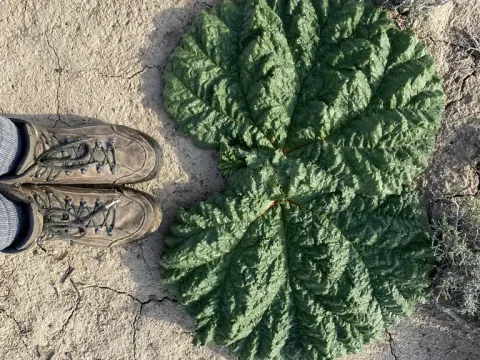
Tatar rhubarb
Rheum tataricum
Tatar rhubarb, a member of the Polygonaceae family, is a perennial herbaceous plant. The best time for sowing seeds in the open ground is early spring, once the soil warms up to 5-8 degrees Celsius, or late autumn for winter sowing.
What the section contains
Tatar rhubarb
For propagation, seeds are sown at a depth of 2–3 centimeters, maintaining row spacing of approximately 60–80 centimeters. It is essential to ensure adequate soil moisture during the germination period, as the seeds require sufficient water to swell.
Starting plants in a nursery is preferred to ensure stronger seedlings, as the plant develops slowly in its first year. Transplanting to the permanent location is carried out at 60–70 days old, after the danger of late frost has passed.
The site selection should focus on sunny areas protected from strong winds. The crop has a deep root system, so it is crucial to ensure the planting location is free from high groundwater levels.
Sowing Tatar rhubarb requires soil preparation, which includes incorporating organic fertilizers such as humus or compost at a rate of 5–8 kilograms per square meter of area.
Tatar rhubarb is a typical xerophyte, adapted to the semi-desert and steppe conditions of Central Asia. It thrives in high temperatures and long periods of drought, making it a promising crop for arid agricultural regions.
The crop prefers light sandy or loamy soils with good aeration. A neutral to slightly alkaline pH level is a key requirement, as plant development slows down significantly in highly acidic soils.
Intensive sunlight is necessary for the plant throughout the entire growing season to succeed. Under shading conditions, the concentration of biologically active compounds in the petioles and roots decreases noticeably.
The temperature regime should align with a continental climate. The plant is highly frost-resistant and can withstand harsh winters under a snow cover, maintaining the viability of its rhizomes.
Under cultivated conditions, moderate irrigation is required during the first half of the growing season, especially during the formation of the leaf rosette and active growth of flower stalks to ensure high productivity.
The economic use of Tatar rhubarb spans both the food and pharmaceutical industries. Young leaf petioles are consumed for their specific sour taste, caused by the presence of malic and citric acids.
The rhizomes of the plant are of particular value in medicine. They contain anthraglycosides, tannins, and resins that provide distinct laxative or astringent effects, depending on the specific dosage applied.
Harvesting the green mass is carried out as the petioles reach market maturity, usually starting from the second year. It is important not to over-harvest the plant, leaving at least 30% of the leaves for photosynthesis.
Yield depends on the plantation age and the agricultural background. At peak productivity, typically between 4–6 years of growth, one can harvest up to 2–3 kilograms of market-ready petioles per plant per season.
For pharmaceutical raw materials, roots are harvested in the autumn after the growing season concludes. The collected material is washed, sliced, and dried at temperatures between 50–60 degrees Celsius.
Tatar rhubarb is quite resistant to diseases, but it may be affected by root rot under conditions of excessive moisture. Fungal diseases such as Fusarium can occur if water stagnates in heavy soils.
Among pests, the rhubarb weevil and various aphid species pose the greatest threat. These insects damage the leaf blades and petioles, reducing the overall quality of the produce and weakening the plant's health.
Control measures include proper crop rotation and spatial isolation from other Polygonaceae species. Removing damaged plant parts and timely weeding are recommended, as weeds can act as disease reservoirs.
In industrial-scale production, biopesticides are preferred for pest control. Chemical insecticides should be used with extreme caution, strictly observing the pre-harvest interval if the petioles are intended for food consumption.
Disease prevention consists of maintaining optimal planting density. Overly dense plantings promote high humidity around the leaves, creating favorable conditions for the development of various pathogens.
Harvesting Tatar rhubarb leaves is performed manually. Petioles should not be cut with a knife but carefully twisted off at the base to avoid damaging the dormant buds located on the rhizome.
The optimal time for harvesting petioles is early morning when the plant tissues are fully hydrated and maintain turgor. After harvesting, it is recommended to store the produce in a cool, dark place.
Root harvesting is carried out exclusively in dry weather. After digging, the rhizomes are cleaned of soil, damaged sections are removed, and the remnants of aerial parts are trimmed before initial processing.
Storage of fresh petioles is limited to a few days at room temperature. For long-term storage, the petioles can be frozen or processed into candied fruits, preserves, or juices that retain their beneficial properties.
Regular harvesting stimulates the growth of new leaves; however, it is important to stop harvesting 1.5–2 months before the onset of permanent cold weather so the plant can accumulate nutrient reserves for winter.