
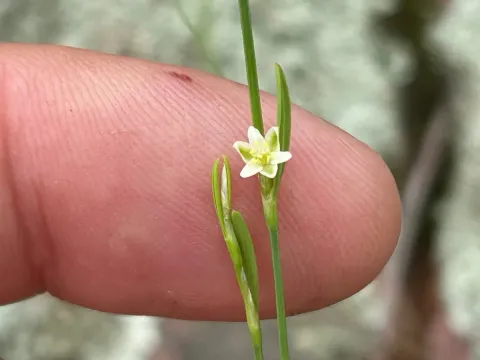
Slender knotweed
Polygonum tenue
Slender knotweed (Polygonum tenue) is an annual herbaceous plant belonging to the Polygonaceae family. In its natural habitat, it propagates primarily through seeds that disperse in the late summer or early autumn.
What the section contains
Slender knotweed
For cultivation, seeding is best performed in early spring once the soil temperature consistently reaches 10 degrees Celsius. Seeds should be planted at a depth of 1 to 2 centimeters to ensure effective germination and emergence.
Preparing a fine seedbed is essential for this crop to facilitate optimal root development. The field should be cleared of perennial weeds to prevent competition during the initial establishment phase of the knotweed.
The sowing density depends on the intended use of the crop, whether for vegetation cover or seed production. Uniform sowing improves canopy closure, which helps the crop outcompete opportunistic weeds during the early stages.
Regular moisture provision after sowing is critical for high germination rates. Once the plants are established, they show high resilience to environmental fluctuations, allowing for stable growth under varying conditions.
This plant thrives in well-drained, dry, and often sandy or rocky soils. It is well-known for its high tolerance to drought and poor soil fertility, making it a suitable candidate for marginal land management.
Full sun exposure is a requirement for the successful development of Slender knotweed. Shaded environments inhibit its growth, leading to weak stems and a significant reduction in overall plant biomass and seed production.
The ideal temperature range for the active growth of the species is between 18 and 25 degrees Celsius. It requires excellent drainage as it is highly sensitive to waterlogging, which can cause root rot.
The plant prefers neutral to slightly acidic soil conditions. While it is hardy, nutrient-deficient soils may benefit from balanced phosphorous-potassium fertilization to support healthy stem structure and development.
Maintenance involves minimal intervention once the stand is established, provided that the location meets the light and moisture requirements. Proper spacing between rows is recommended to ensure air circulation and reduce disease pressure.
Fungal diseases, including powdery mildew and various leaf spot infections, are the most common threats to the plant, especially in humid and stagnant air conditions. Improving airflow is the best preventive measure.
Pests such as aphids and leaf-eating insects can cause damage during the active growing season. Regular scouting of the field is necessary to detect infestations early and apply appropriate control measures if required.
Root rots are frequently associated with poor soil drainage and waterlogging. Ensuring the field has adequate drainage slopes is vital for protecting the root system and maintaining long-term plant health.
Weed management remains the most challenging aspect of cultivation, as young seedlings can be easily outcompeted. Mechanical weeding or careful site selection is crucial to ensure the crop has a clean start.
Crop rotation protocols should be followed to reduce the risk of soil-borne pathogens. Avoiding continuous cropping of Polygonaceae species on the same field helps maintain soil health and vigor.