
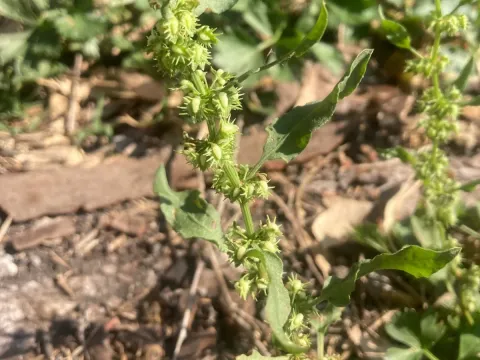
Toothed dock
Rumex dentatus
Toothed dock (Rumex dentatus) is a herbaceous plant belonging to the Polygonaceae family. It is primarily a weed species that spreads effectively through a prolific production of seeds, which are dispersed by wind, water, and agricultural machinery.
What the section contains
Toothed dock
The germination of its seeds typically occurs in the spring when soil temperatures reach favorable levels. The seeds possess a significant degree of dormancy, allowing them to remain viable in the soil seed bank for several growing seasons.
In agricultural environments, toothed dock often emerges in disturbed sites, including fallow fields, road verges, and poorly drained arable land. Rapid early growth allows it to establish a strong root system before competitive crops mature.
Farmers should implement stale seedbed techniques, where the soil is lightly tilled to promote early weed emergence, followed by mechanical eradication before the main crop is sown to reduce the overall weed pressure.
Effective management requires vigilance during the post-harvest period. Preventing the formation of mature seeds is crucial to halting the cycle of infestation in subsequent years.
This species thrives in moist to wet environments, commonly occurring in floodplains, irrigation channels, and depressions where soil moisture is consistently high. It exhibits significant tolerance to waterlogged conditions.
Toothed dock is highly adaptable to various soil types, ranging from sandy loams to heavy clays. It is particularly well-adapted to saline soils, where it can outperform many conventional crop varieties.
The plant has a moderate to high requirement for nutrients, often exploiting the nitrogen and phosphorus applied to adjacent crops. Its ability to extract nutrients from deeper soil layers makes it a tough competitor.
Light availability is a key factor for optimal growth, although the plant remains resilient under partial shading. Dense canopy formation in cereal crops is an effective biological tool for suppressing the weed's development.
Temperature tolerance is broad, enabling the plant to successfully colonize different climatic zones. It remains metabolically active across a wide range of temperatures, provided soil moisture remains available.
While toothed dock is generally robust, it can be affected by fungal pathogens such as rusts and mildews. These infections may weaken the plant but are rarely sufficient to provide total control on their own.
Various insect pests, including aphids and leaf-eating beetles, may colonize the plants. Although these pests can cause cosmetic or physiological stress, they often act as vectors for viruses that may spill over into crops.
Control using chemical herbicides is challenging due to the plant's physiological similarities to some crops. Non-selective systemic herbicides applied during the fallow phase are typically the most effective chemical approach.
Mechanical cultivation remains the cornerstone of integrated weed management. Uprooting or cutting the taproot before the plant enters its reproductive stage significantly reduces its ability to regenerate.
- Cultural methods like crop rotation and cover cropping.
- Timely removal from field edges to prevent encroachment.
- Sanitation of equipment to prevent seed dispersal between fields.