
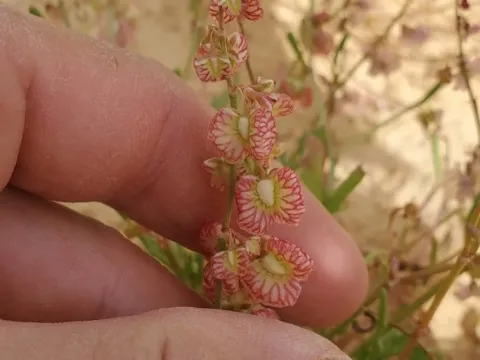
Painted dock
Rumex pictus
Painted dock (Rumex pictus) belongs to the Polygonaceae family and is known for its distinct appearance. The seeds should be sown in early spring, once the soil has warmed to at least 5–8 degrees Celsius. Autumn sowing is also an option, provided the seeds are protected from heavy winter rains.
What the section contains
Painted dock
Choose a location with loose, well-draining soil to ensure the seeds can germinate effectively. Sowing depth should be kept shallow, between 1 and 2 centimeters, to allow the small seeds easy access to the surface during the emergence phase.
Row spacing of about 30 to 40 centimeters is recommended to give each plant enough room to develop a full rosette of leaves. Consistent soil moisture during the first few weeks after sowing is crucial for a uniform crop stand.
As the seedlings emerge, thinning may be necessary if the seeds were sown too densely. This step ensures that individual plants have enough air circulation, reducing the likelihood of damping-off diseases during the early stages of growth.
If the soil is particularly heavy, adding organic matter such as compost before sowing will significantly improve the success rate of this crop, as it helps maintain an optimal environment for root establishment.
Rumex pictus prefers full sun exposure to maintain the vibrant coloration of its leaves. While it can tolerate partial shade, insufficient light will lead to duller foliage, reducing its decorative or market value.
The plant thrives in fertile, loamy soils with a neutral or slightly acidic pH level. It is essential to provide good drainage, as the roots are sensitive to waterlogging, which can quickly lead to decay in unfavorable soil conditions.
Climatically, painted dock is well-adapted to temperate regions. It is relatively frost-hardy, allowing it to survive winter temperatures without the need for additional protection, although mulch can be helpful in regions with severe, snowless winters.
Watering is necessary throughout the growing season, especially during hot, dry spells. Without enough moisture, the plant may trigger its reproductive phase early, resulting in unwanted flowering stalks instead of lush, harvestable leaves.
Regular maintenance, including weeding and soil loosening between rows, is required to prevent competition from aggressive weeds. A healthy plant will show strong leaf growth if it is shielded from resource-stealing vegetation.
The yield potential of painted dock is directly linked to soil fertility and the frequency of harvests. With optimal care, one can expect several kilograms of leafy material per square meter over the course of the growing season.
Harvesting begins once the plant has developed a sturdy rosette, typically 40 to 50 days after sowing. Proper cutting techniques—leaving the central bud intact—are essential to ensure that the plant continues to produce new leaves throughout the summer.
Frequent harvests stimulate the plant to continuously replenish its foliage. By keeping the plant in a vegetative state and removing any emerging flower stalks, growers can significantly extend the productive lifespan of the plantation.
Production typically peaks in mid-summer, provided that the plant has received sufficient nitrogen and water. As autumn approaches, leaf growth will slow down, and it is important to stop harvesting to allow the plant to store energy for the coming winter.
Crop rotation every three years is recommended to maintain yield quality, as soil depletion or the buildup of pathogens can occur if the same site is cropped for too long without appropriate soil management.
Painted dock faces several threats, with fungal diseases such as powdery mildew being the most common, especially in humid and stagnant air conditions. Visible signs include a white, dust-like coating on the foliage.
Leaf rust is another potential concern that manifests as dark spots on the leaves. Preventive measures include ensuring proper spacing between plants and avoiding overhead irrigation, which keeps the leaf surface wet and susceptible to infection.
Pests like the dock leaf beetle can cause significant damage to foliage. While large infestations require attention, small populations can often be managed through manual removal or the use of eco-friendly insecticidal soaps.
Aphids often target young, tender leaves, causing curling and stunted growth. Regularly inspecting the undersides of the leaves can help identify an outbreak early, allowing for quick control before the population explodes.
Root-feeding pests like wireworms can be problematic in older fields. Maintaining healthy, vigorous plants through proper nutrition and crop rotation is the best defense against these underground threats.
Harvesting should be conducted in the cool morning hours when the leaves are turgid and contain maximum moisture. Leaves are typically cut using a sharp knife about 3–5 centimeters above the ground level.
After cutting, the harvest must be kept away from direct sunlight to prevent wilting. Prompt cooling is recommended to maintain the fresh, crisp quality required for commercial or decorative use.
For larger operations, mechanical harvesters set to the appropriate cutting height can be used, although they require careful monitoring to avoid soil contamination and damage to the plant crown.
Stored leaves should be kept in perforated plastic bags in a refrigerator set between 0 and 2 degrees Celsius. This method maintains freshness and aesthetic quality for several days post-harvest.
The final harvest of the year should be performed well before the first frost, ensuring the plant has enough time to recover and consolidate its energy stores in the roots for successful regrowth the following spring.