
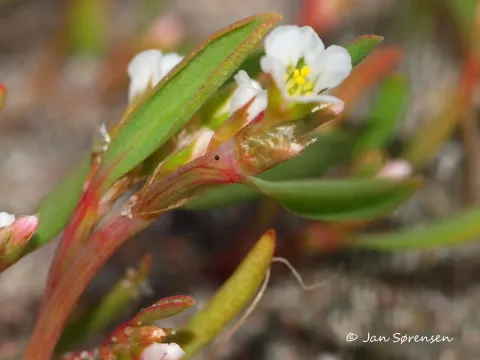
Northern knotweed
Polygonum boreale
Northern knotweed is a resilient species that predominantly propagates through seed dispersal in its native boreal environments, requiring specific conditions for germination.
What the section contains
Northern knotweed
When considered in an agricultural context as part of forage mixtures, the sowing should occur in early spring when soil moisture is sufficient to support initial growth.
Seeds of Polygonum boreale require minimal burial depth, as light exposure is a critical factor for the biochemical activation and emergence of the seedlings.
Successful establishment relies on precise seedbed preparation, ensuring that the soil surface is firm yet granular enough to provide moisture contact for the seeds.
Agricultural management during the establishment phase should focus on avoiding competition from fast-growing weeds to allow the seedlings to develop a strong root system.
As a member of the Polygonaceae family, Northern knotweed is biologically adapted to thrive in northern latitudes, exhibiting exceptional tolerance to harsh cold weather.
The plant has a strong preference for well-lit environments and is capable of maintaining high metabolic rates in regions with long daylight hours during the summer.
Northern knotweed thrives in a variety of soil types, ranging from sandy loams to heavier clay compositions, provided that the drainage is adequate for its growth.
Nutrient requirements are relatively low, making this species a sustainable choice for grazing areas where intensive fertilization is not economically feasible or desirable.
Climatic adaptability is a hallmark of this species, which can endure significant temperature fluctuations and surviving early frost events that would damage other sensitive crops.
Northern knotweed is generally robust, but it can be susceptible to fungal pathogens like rusts if grown in areas with poor ventilation and high atmospheric humidity.
Insect pests, primarily those that feed on foliage, can cause localized damage, although the plant's structural integrity often allows it to recover quickly from minor attacks.
Root rot is a potential threat when the plants are subjected to prolonged waterlogging, which weakens the root tissue and makes it vulnerable to soil-borne pathogens.
Effective management against threats involves maintaining an appropriate stand density to promote airflow, thereby reducing the conditions favorable for fungal growth.
Regular field scouting is recommended to monitor for pest population spikes, ensuring that the plant's health remains optimal throughout the short northern growing season.