
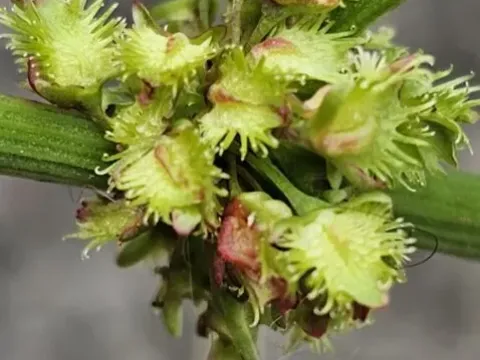
Nepal sorrel
Rumex nepalensis
Nepal sorrel (Rumex nepalensis) is a hardy perennial herb belonging to the Polygonaceae family. For optimal establishment, seeds should be sown in early spring as soon as the soil is workable or in late autumn before the first frost.
What the section contains
Nepal sorrel
The seeds require a well-prepared seedbed with fine soil structure. A seeding depth of 1.5 to 2 centimeters is ideal to ensure sufficient moisture contact while allowing the emerging sprout to reach the surface.
Spacing between rows should be maintained at 30–45 centimeters. This distance provides adequate airflow and space for mechanical weeding, which is essential for maintaining crop health.
Germination typically occurs within two to three weeks under favorable soil temperatures. During this period, consistent moisture levels must be maintained to prevent the delicate seeds from drying out.
Once established, the plant exhibits strong regenerative capabilities, allowing it to produce multiple harvests from the same root system over several years.
This crop thrives in fertile, loamy soils that possess good organic content and moderate drainage. It performs best in soils with a neutral or slightly acidic pH range.
Being a mountain-origin species, Nepal sorrel is exceptionally cold-hardy and can withstand significant temperature fluctuations, including harsh winters in temperate zones.
Exposure to full sunlight is critical for maximizing photosynthetic output and leaf quality. However, the plant can tolerate partial shade in areas with high summer heat intensity.
Water requirements are high during the vegetative growth phase. Regular irrigation is necessary to maintain leaf succulence and prevent premature bolting or stunted development.
Effective nutrient management involves applying balanced fertilizers, emphasizing nitrogen for leaf growth and potassium for robust root system development before the dormant season.
Powdery mildew represents a significant fungal threat, characterized by white patches on leaf surfaces. It often occurs in humid conditions where plant density is too high, hindering airflow.
The sorrel leaf beetle is a common pest that can cause substantial foliage damage. Regular scouting is recommended to identify infestation early and implement necessary control measures.
Root rot is typically associated with waterlogged soils. Improving field drainage and avoiding over-irrigation are the most effective management strategies to prevent this condition.
Aphids can colonize the underside of leaves, causing yellowing and weakening of the plant. Integrated pest management using biological controls is preferred to maintain crop quality.
Weed control is essential during the early stages of establishment. Regular cultivation of the inter-rows effectively suppresses unwanted vegetation and promotes soil aeration.
Harvesting should begin when leaves are fully formed but still tender. Avoiding leaf senescence is important, as older leaves often become fibrous and accumulate higher levels of oxalic acid.
Leaves are typically harvested by cutting them 3–5 centimeters above the soil crown. This technique preserves the plant's apical dominance and encourages faster regrowth.
Depending on regional climatic conditions, 4 to 5 harvests per season are possible. A rest period of 3–4 weeks between cuttings is necessary to allow the plant to replenish its energy reserves.
Post-harvest management is crucial; the leaves should be cooled immediately to maintain freshness and prevent rapid quality degradation caused by high respiration rates.
In regions with harsh winters, a final light harvest can be made in late autumn, followed by a light mulch application to protect the crowns from extreme cold stress.