
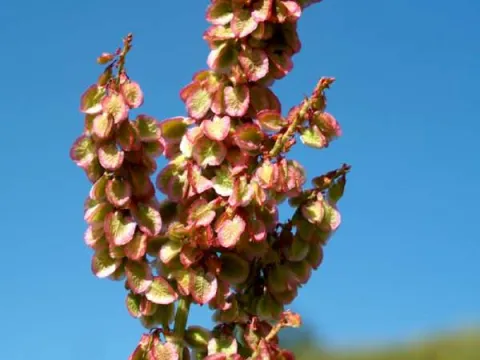
Nebro Sorrel
Rumex nebroides
Nebro Sorrel (Rumex nebroides) is a member of the Polygonaceae family. It is a perennial herbaceous plant valued for its early spring leaves which are harvested shortly after the winter thaw.
What the section contains
Nebro Sorrel
Sowing in open ground is best performed in early spring as soon as the soil temperatures reach 3-5 degrees Celsius. Summer sowings are also possible in June or July for harvesting in the following season.
Winter sowing is a common practice in cooler regions; seeds are planted late in the autumn before the ground freezes. This ensures early germination as soon as spring arrives.
Seeds should be placed at a depth of about 1.5 to 2 centimeters. Rows should be spaced 20 to 25 centimeters apart to provide enough space for air circulation and manual weed control.
Once seedlings emerge, thinning is required to ensure a spacing of 10-15 centimeters between individual plants. Proper thinning promotes larger leaf development and higher yields.
The plant thrives in moist, rich, loamy soils. High organic matter content is essential for sustaining the rapid growth of lush, tender leaves throughout the season.
While the plant prefers full sun for optimal growth, it can tolerate partial shade. However, heavy shade will significantly reduce the vigor and tenderness of the leaf rosettes.
This species is highly cold-hardy and can withstand freezing winter temperatures without protective covering. Its ability to regrow from its rootstock makes it a reliable perennial crop.
Consistent moisture is critical; if the soil dries out, the plants tend to become bitter and may trigger premature bolting, resulting in the development of flowering stalks.
Fertilization with nitrogen-based fertilizers in early spring encourages fast vegetative growth. It is important to apply organic compost annually to maintain soil fertility.
The sorrel leaf beetle is the most significant pest, as it can cause extensive defoliation by eating large holes in the leaves. Controlling the population early is essential.
Rust and powdery mildew are common fungal diseases that can affect the plants, especially during periods of high humidity and poor airflow between the plants.
Leaf spots may appear if the plants are stressed or if the foliage remains wet for extended periods. Proper spacing helps minimize the risk of these infections.
Due to the frequent harvesting of leaves for food, the use of chemical pesticides is discouraged. Instead, focus on cultural practices to manage these threats.
- Maintain proper row spacing to ensure good ventilation.
- Remove infected or yellowing leaves immediately to reduce pathogen load.
- Keep the soil free of weeds that may host pests.
Harvesting begins approximately 40 to 50 days after germination when the leaves are fully developed but still tender. Use a sharp knife to cut leaves, avoiding the crown to encourage regrowth.
Multiple harvests are possible throughout the growing season, usually every 2 to 3 weeks. The harvest cycle should be stopped a month before the first frost to allow the plant to store nutrients for overwintering.