
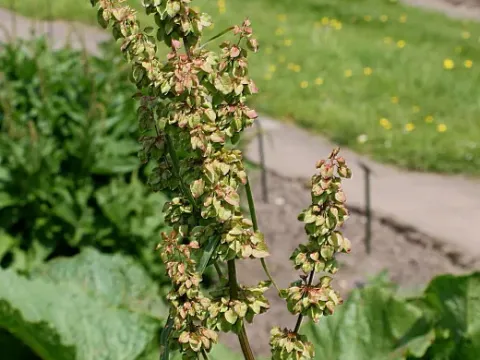
Diverse-leaved sorrel
Rumex heterophyllus
Diverse-leaved sorrel (Rumex heterophyllus) is a hardy perennial belonging to the Polygonaceae family, valued for its early spring production of edible leaves.
What the section contains
Diverse-leaved sorrel
Seeds should be sown in early spring as soon as the soil can be worked, ensuring they have sufficient moisture for consistent germination.
Late summer sowing is also common, allowing the plants to establish a strong root system before the onset of winter dormancy.
When planting, maintain a row spacing of approximately 20 to 30 centimeters to ensure adequate airflow and space for the plants to mature.
The seeds require a shallow planting depth of about 1 centimeter and should be kept moist until the seedlings emerge, which usually takes two weeks.
The plant thrives in fertile, moist soil with a high content of organic matter, preferring a slightly acidic pH level between 4.5 and 5.5.
While sorrel is tolerant of partial shade, it produces the highest leaf quality and yields when grown in full sunlight with adequate water.
Adequate soil moisture is critical; if the soil dries out, the leaves will become bitter, tough, and prone to premature bolting.
As a perennial crop, it requires consistent fertilization, preferably with compost or nitrogen-rich fertilizers applied in the early spring.
It is highly winter-hardy and can withstand freezing temperatures, making it one of the first greens available in the garden after the thaw.
Properly managed sorrel patches can provide multiple harvests throughout the growing season, typically starting 40 days after sowing.
The yield potential is highest in the second and third years, after which the plants might show signs of overcrowding and reduced leaf size.
For sustainable yield, do not harvest more than one-third of the total foliage from a single plant at any given time to allow for regrowth.
Regular harvesting encourages the production of new, tender leaves and keeps the plant in a vegetative state for a longer period.
The total annual harvest depends largely on the frequency of cutting and the availability of water throughout the summer heat.
The sorrel leaf beetle is the most common pest, which can quickly skeletonize the leaves if left untreated during the active growth phase.
Fungal diseases, including leaf spot and downy mildew, can occur in humid environments, leading to unsightly patches and decay.
Weeds can be a significant threat in the early establishment phase, as they compete with the sorrel for water and essential nutrients.
Integrated pest management is recommended, focusing on hand-picking beetles and ensuring proper spacing to minimize fungal risks.
- Pest monitoring for leaf beetles
- Frequent soil aeration
- Removal of bolting stalks
Harvesting is best performed in the cool morning hours to ensure that the leaves maintain their crisp texture and nutritional value.
Leaves should be cut at the base using a clean, sharp knife, taking care to leave the central crown intact to support future growth.
The removal of flower stalks is an essential part of the harvest process to redirect energy back into leaf development.
Post-harvest handling is crucial; sorrel leaves are perishable and should be chilled immediately if not consumed or processed right away.
Proper maintenance of the harvesting cycle ensures that the plant remains productive throughout the entire spring and summer season.