
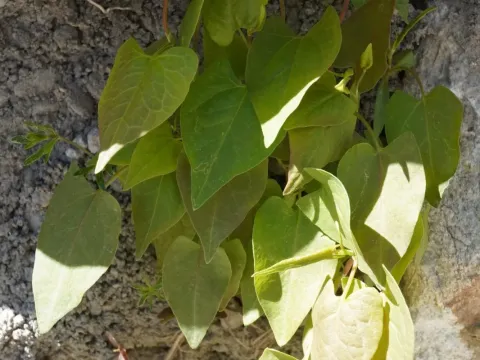
Fallopia
Fallopia
Propagation of Fallopia is primarily achieved through rhizome cuttings, which is the most efficient way to establish new plantations. Planting occurs in early spring once the soil reaches a sufficient temperature for root initiation.
What the section contains


Fallopia
When sowing seeds, stratification is required to ensure optimal germination rates. Seeds are typically sown in prepared seedbeds with high moisture retention capacity to support early development.
Spacing is critical due to the plant's vigorous growth habit. A minimum distance of one meter between plants is recommended to allow for initial establishment without excessive competition.
Depth of planting varies, but rhizomes should be placed 10 to 15 centimeters deep to ensure protection from surface drying and environmental stress.
Post-planting care includes adequate irrigation, especially during the first few weeks, to ensure the root system establishes a strong connection with the soil matrix.
Fallopia belongs to the Polygonaceae family and is known for its remarkable resilience. It thrives in various soil types, ranging from sandy loams to heavier, nutrient-dense clay soils.
The crop prefers full sun exposure to maximize biomass production, though it demonstrates significant shade tolerance. Its high adaptability makes it suitable for diverse geographical regions.
Climatic requirements are broad, as the plant is cold-hardy and capable of recovering quickly from severe winter freezes and summer droughts.
Agronomic management must prioritize containment, as the species has significant invasive potential. Using physical or deep-root barriers is essential to prevent uncontrolled spread into surrounding areas.
Soil fertility management should focus on maintaining steady nitrogen levels, which promotes rapid vegetative growth, especially useful in biomass-producing or phytoremediation contexts.
Fallopia possesses strong natural immunity to common agricultural pests and diseases. Its chemical composition makes it unappealing to most herbivorous insects.
Occasional foliar fungal spots may appear under extremely humid conditions, but these rarely impact the overall health or yield potential of the plant significantly.
The primary threat is the plant's own invasive nature rather than external pathogens. Managing its spread requires consistent mechanical intervention or targeted chemical applications.
Soil-borne pests rarely affect the robust rhizome network, making it one of the most reliable and low-maintenance plants in terms of pest management.
Preventive strategies should focus on strict site management to ensure that rhizome fragments do not escape the cultivation area, which remains the top priority for farmers.