
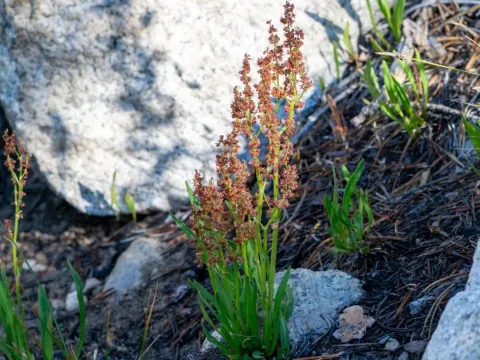
Few-leaved dock
Rumex paucifolius
The sowing of the few-leaved dock is primarily conducted in early spring once the soil temperature reaches 5–7 degrees Celsius or in late summer for harvest.
What the section contains
Few-leaved dock
Seeds should be sown in rows with spacing of approximately 25–30 centimeters, which simplifies maintenance and weed control throughout the season.
The sowing depth is 2 centimeters in light soils, but for heavier or moisture-retentive soils, it should not exceed 1–1.5 centimeters for optimal germination.
To achieve the correct plant density, thinning is required at the two-leaf stage, leaving 10–15 centimeters between individual plants in the row.
Autumn planting is a viable strategy in temperate climates as it allows plants to establish their root systems before the onset of winter dormancy.
The few-leaved dock belongs to the Polygonaceae family and is a hardy perennial herb known for its high ecological adaptability and resilience.
The crop thrives in well-moistened, humus-rich loamy or sandy loam soils with a neutral or slightly acidic soil pH level for best results.
This plant exhibits strong cold hardiness, allowing it to successfully overwinter in open field conditions without requiring specialized protective covers.
While the dock prefers sunny locations, it can tolerate partial shade, which is often beneficial in regions characterized by hot and dry summer months.
Good agricultural practice includes regular irrigation during active growth phases, as drought stress often induces premature flowering and leaf loss.
The economic value of the few-leaved dock lies in its harvest of fresh, young leaves that are rich in organic acids and essential vitamins.
With proper agronomic management, the first substantial harvest of green foliage can be expected within 45–60 days after mass germination occurs.
Overall yield is heavily dependent on soil fertility levels and the timely application of nitrogen fertilizers to stimulate robust leaf rosette growth.
During a favorable growing season, gardeners can perform 3–4 scheduled leaf harvests, providing a consistent supply of produce from a small area.
Plantation productivity typically declines after 4–5 years, at which point the site should be replanted to maintain high yields and leaf quality.
Key pests affecting this crop include the dock leaf beetle and aphids, both of which can significantly diminish both the aesthetic and nutritional quality.
Fungal diseases like powdery mildew are the most common issue, typically developing under conditions of high air humidity and poor ventilation.
Preventative measures include crop rotation, the prompt removal of plant debris, and avoiding excessively dense planting patterns that block airflow.
Biological pest control methods, such as neem oil or botanical extracts, are recommended to maintain organic standards and avoid harsh synthetic residues.
Regular weeding and soil aeration are essential for promoting soil health and increasing the natural stress resistance of the dock plants.
Harvesting is performed by manually cutting the outer leaves of the rosette, leaving about 3–5 centimeters above the soil to protect the growing point.
Consistency is key; regular harvesting prevents the leaves from becoming woody and bitter, ensuring that only tender foliage reaches the kitchen.
The best time for harvesting is during the early morning hours, as the leaves are turgid and contain maximum moisture content after the night.
After each cutting cycle, it is highly recommended to perform light hoeing and apply liquid organic fertilizers to support rapid regrowth of new leaves.
The final harvest of the season should occur at least one month before the first hard frost to allow the plant to store energy for successful wintering.