
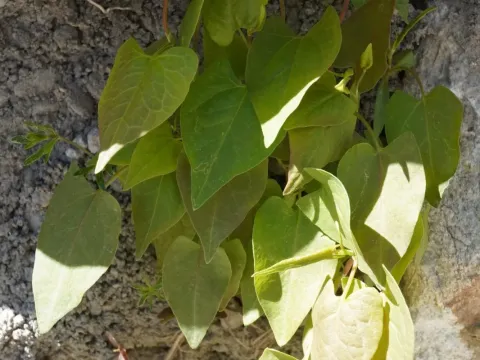
Fallopia
Fallopia Adans.
Fallopia is typically propagated through vegetative division of its rhizomes. Planting is best performed in early spring or autumn, ensuring that the soil is sufficiently loose and well-drained to promote rapid root establishment and vegetative growth.
What the section contains


Fallopia
When seed propagation is required, it must be performed under controlled environmental conditions. Seeds require specific temperatures and consistent moisture levels to break dormancy and achieve a high percentage of successful germination for nursery production.
Choosing a suitable planting site requires careful consideration due to the plant's high vigor. Utilizing physical root barriers is highly recommended to confine the plant to the designated area and prevent it from encroaching on surrounding infrastructure or farmland.
Proper plant spacing is vital to maximize biomass yield. Depending on the intended end-use, such as biomass production or screen planting, the density should be adjusted to allow each plant sufficient resources for optimal growth during the season.
Post-planting care involves maintaining a weed-free environment during the initial establishment phase. Once the plant has developed a strong root system, it becomes highly competitive and can naturally suppress most weeds in the immediate vicinity.
As a member of the Polygonaceae family, Fallopia exhibits remarkable ecological plasticity. It thrives in various soil types, from rich loams to disturbed industrial grounds, demonstrating a high tolerance for varying nutrient levels and soil conditions.
The plant performs best in environments with consistent moisture. While it shows some drought tolerance once established, supplemental irrigation during peak summer months is beneficial for sustaining optimal growth and preventing physiological stress.
Fallopia is adaptable to a wide range of lighting conditions. It grows vigorously in full sun, which is ideal for biomass production, but can also withstand partial shade, making it a versatile choice for different landscape configurations.
Temperature requirements are generally modest as the plant is hardy and capable of surviving cold winters. The dormant rhizomes are well-protected underground, allowing for reliable regrowth in the following spring even after harsh seasonal freezes.
Soil management for Fallopia is minimal compared to other agricultural crops. It does not require intensive fertilization, as it efficiently utilizes available nutrients, making it a low-input crop suitable for various sustainable farming practices.
The primary agricultural use of Fallopia is the production of green biomass, which serves as a valuable organic matter source for composting or as a mulching material to improve soil structure and fertility in agricultural fields.
In apiculture, Fallopia is prized as a late-season honey plant. Its late flowering period provides a critical source of nectar when other floral resources are scarce, helping to support honeybee colony strength before the winter period.
Certain species within the genus are recognized for their medicinal potential. They contain significant concentrations of bioactive compounds, such as resveratrol, which have led to interest in the plant as a raw material for the pharmaceutical industry.
Fallopia is also being explored as a feedstock for renewable energy. The rapid growth rate of its stems makes it a promising candidate for biomass energy projects, providing a sustainable alternative to traditional fossil fuel inputs.
Due to its dense growth habit, it is also utilized for land restoration and erosion control. Its expansive root network is highly effective at stabilizing soils on embankments and marginal lands, offering a practical solution for habitat management.
Fallopia is notably resistant to most common agricultural pests. The presence of secondary metabolites in its tissues acts as a natural deterrent, significantly reducing the need for chemical insecticide applications during the growing season.
Fungal diseases like powdery mildew may occur under conditions of high humidity and poor airflow. Managing plant density and ensuring adequate spacing are the most effective cultural practices to mitigate the risk of fungal infections.
Occasional infestations of aphids or mites might occur during periods of extreme environmental stress. Regular monitoring is sufficient to identify and manage these issues, often requiring only simple organic treatments if damage becomes significant.
The most significant threat associated with Fallopia is its potential for becoming an invasive species. Strict containment protocols and regular site inspections are necessary to prevent the plant from spreading to sensitive non-target ecosystems.
Root rots can develop in poorly drained or waterlogged soils. Maintaining optimal soil moisture levels and ensuring that planting materials are free from rot pathogens at the time of propagation are crucial for long-term plantation health.