
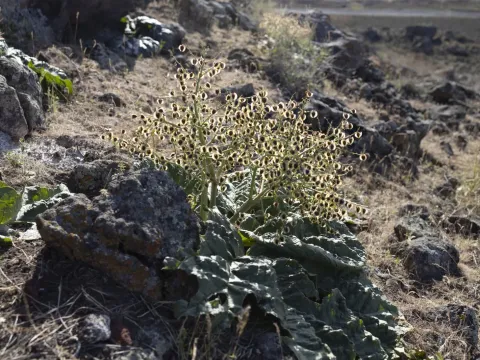
Currant rhubarb
Rheum ribes
Currant rhubarb (Rheum ribes) is a perennial herbaceous plant belonging to the Polygonaceae family. Originating from the mountainous regions of Western Asia, including areas of Turkey, Iran, and Lebanon, this species is well-adapted to rocky terrain and harsh climatic fluctuations typical of high-altitude environments.
What the section contains
Currant rhubarb
The plant is distinguished by a strong, deep root system and large, fleshy basal leaves that emerge early in the spring season. Its impressive inflorescences consist of large panicles with numerous small flowers, which are both biologically significant for seed production and aesthetically striking in a garden landscape.
The plant thrives in well-drained, fertile soil that retains moisture but prevents waterlogging. Given its mountainous origin, currant rhubarb is highly resilient to temperature variations and prefers locations with adequate sunlight, although it benefits from partial shade during peak summer heat to prevent scorching.
Agronomic management involves maintaining soil aeration through regular hoeing and keeping the planting area free from invasive weeds. While the plant is inherently hardy, providing a consistent supply of nutrients in the form of compost or organic fertilizers significantly boosts the vigor and yield of the edible stalks.
Economically, Rheum ribes is valued for its culinary uses, particularly its acidic petioles and flower buds. These parts are often processed into jams, pickles, or eaten raw, offering a unique flavor profile often compared to wild currants, which accounts for its common English name.
Fungal pathogens such as powdery mildew represent the primary biological threat to the plant, especially in regions with high humidity or poor ventilation. Implementing a proper spacing strategy between individual plants is the most effective preventative measure to ensure airflow and reduce moisture accumulation on leaves.
Pests like aphids and certain leaf-feeding larvae are known to occasionally infest the foliage, potentially stunting plant growth. Integrated pest management, focusing on early detection and the use of soft horticultural soaps or biological control agents, is recommended to keep pest populations within manageable limits.