
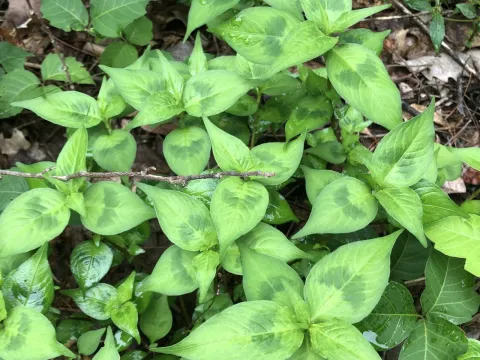
Creeping smartweed
Persicaria caespitosa
Creeping smartweed, known botanically as Persicaria caespitosa, is an annual herb within the Polygonaceae family. In an agricultural context, it is recognized as an invasive weed capable of spreading rapidly through cultivated fields.
What the section contains
Creeping smartweed
The plant germinates primarily in the spring. Seedlings usually emerge in moist, disturbed soil environments. Its ability to produce a high number of seeds per plant ensures that it remains a persistent challenge for farmers during successive seasons.
The lifecycle is adapted to typical cropping seasons, allowing the weed to thrive in the same conditions as corn, soybeans, or cereal crops. Without interference, it can quickly establish a dense cover that smothers emerging crops.
Early season control is vital, as the plant grows aggressively once temperatures rise. Mechanical weeding or pre-emergence herbicide applications are the most common strategies utilized to mitigate its impact on crop yields.
Farmers must monitor fields closely during the early growth stages of the crop. Delayed control measures often lead to significantly higher weed biomass, making mechanical removal more difficult and costly later in the season.
This species is highly moisture-dependent and naturally colonizes damp habitats, including ditch banks, floodplains, and poorly drained sections of agricultural plots. It flourishes in areas where the soil remains consistently moist.
The nutrient requirements of Persicaria caespitosa are aligned with those of common crops. It benefits from high nitrogen levels, often exploiting surplus fertilizers meant for cash crops, which leads to excessive and rapid weed growth.
Light availability is a key growth factor. While it is tolerant to various soil types ranging from loams to heavy clays, it competes best in environments where there is limited shade from the canopy of the target crop.
Soil management practices such as effective drainage and deep plowing help in managing the seed bank. By burying seeds deep in the soil, farmers can prevent them from germinating effectively during the following planting season.
Maintaining a high level of crop vigor is essential. Dense, uniform crop stands provide better competition for nutrients and light, naturally suppressing the development of creeping smartweed in the field interior.
As a weed, creeping smartweed can host various agricultural pests, including aphids. These insects can cause direct damage to the weed and then migrate to adjacent crops, potentially introducing viral pathogens to the field.
Fungal diseases such as downy mildew can be transferred from the weeds to sensitive crops. This complicates integrated pest management strategies, as weed patches become reservoirs for persistent infections.
Herbicidal control is the primary defense. Post-emergence application of broadleaf-specific herbicides is often required. Timing is critical, as older plants develop waxy coatings on their leaves that reduce herbicide absorption.
Integrated weed management (IWM) also emphasizes the importance of sanitation. Cleaning agricultural machinery between fields prevents the spread of seeds, which can easily adhere to tires and soil-working implements.
Crop rotation is another vital strategy. Rotating with crops that have different planting times or canopy structures helps break the life cycle of the weed, reducing its overall density within the agricultural system over time.