
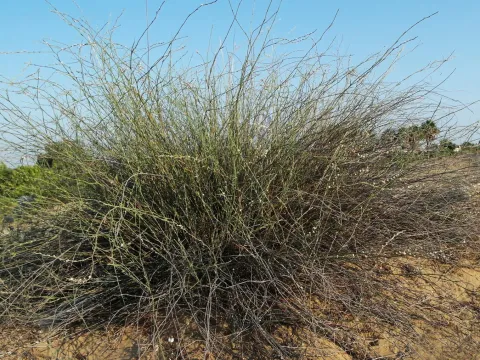
Equisetum-leaved knotweed
Polygonum equisetiforme
Equisetum-leaved knotweed (Polygonum equisetiforme) is a resilient perennial herb belonging to the Polygonaceae family. Sowing is typically conducted in early spring, once soil temperatures become favorable for germination and establishment.
What the section contains
Equisetum-leaved knotweed
The plant requires a row spacing of 45-60 cm to allow for sufficient root development and air circulation between individual plants. Seed depth should be minimal, generally not exceeding 2-3 cm, to ensure successful seedling emergence.
Vegetative propagation using root cuttings is a common and highly effective method for establishing new stands. This technique is often preferred in large-scale land restoration projects where quick soil fixation is required.
Seedbed preparation should involve fine tilling to ensure good soil-to-seed contact. Given the small size of the seeds, firming the soil with a roller after sowing is recommended to improve moisture retention.
Once established, the knotweed displays vigorous growth. Monitoring for weed competition during the first few months is essential, as the young seedlings are initially sensitive to encroachment by more aggressive herbaceous species.
This species is exceptionally well-adapted to arid and semi-arid environments, demonstrating remarkable tolerance to extreme heat and prolonged drought conditions. It thrives in regions where water availability is a major limiting factor.
The plant is highly versatile regarding soil types, showing excellent growth on sandy, loamy, and even moderately saline soils. This adaptability makes it a premier candidate for reclaiming degraded lands.
Full sun exposure is a strict requirement for optimal physiological function. The plant does not tolerate shading, which significantly reduces its photosynthetic efficiency and overall production of biomass.
Regarding soil fertility, it is not particularly demanding but responds favorably to basic nutrient inputs. Good drainage is critical, as the plant is susceptible to root rot if grown in waterlogged, heavy clay soils.
The species prefers a neutral to slightly alkaline soil pH. By maintaining appropriate soil chemistry, growers can maximize the root system's potential, ensuring long-term survival in harsh agricultural settings.
The primary use of this knotweed species is in livestock forage, specifically for grazing animals such as sheep and goats in arid regions. It provides a reliable green feed source during the hot dry season.
Beyond forage, it serves as an excellent phytoremediation tool. Its extensive, deep-reaching root system plays a crucial role in binding unstable sandy soils, effectively preventing wind and water erosion.
The plant is known for its high regenerative capacity. After being grazed or harvested, it displays rapid regrowth, allowing for multiple utilization cycles within a single growing season under optimal management.
In environmental management, the knotweed is utilized to stabilize slopes and embankments. Its structural strength helps maintain the integrity of the ground surface, protecting it from weathering and mechanical destruction.
Though not a high-intensity cash crop, its ability to yield useful biomass on marginal lands makes it a high-value species for sustainable land management and rural agricultural development programs.
Equisetum-leaved knotweed generally possesses high natural resistance to many common agricultural pathogens due to the presence of secondary metabolites such as tannins that act as defense compounds.
Under conditions of poor ventilation or excessive humidity, the plants may become susceptible to powdery mildew. Ensuring adequate spacing between rows significantly reduces the likelihood of such fungal infections.
Aphids are the most frequent insect pests, attacking the succulent tips of growing stems. Early detection and targeted treatment with biological control agents or soft insecticides are recommended to prevent infestations.
Subterranean pests may occasionally damage the root system, leading to stunted plant growth. Crop rotation and regular field inspections are standard practices to keep these threats below the economic injury level.
A balanced integrated pest management (IPM) approach, emphasizing crop hygiene and preventive measures, is usually sufficient to maintain healthy and productive stands over many years.