
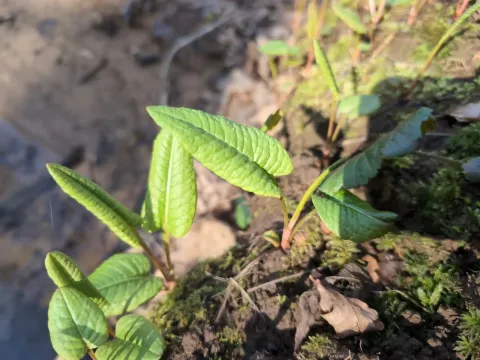
Common bistort
Bistorta
Common bistort is a perennial plant typically propagated via rhizome division. The best time for planting is early spring before active growth begins, or during the autumn months once the plant enters its dormancy phase.
What the section contains
 Alpine bistort
Bistorta vivipara
Alpine bistort
Bistorta vivipara
 Bistorta carnea
Bistorta carnea
Bistorta carnea
 Bistorta emodi
Bistorta emodi
Bistorta emodi
 Bistorta hayachinensis
Bistorta hayachinensis
Bistorta hayachinensis
 Bistorta macrophylla
Bistorta macrophylla
Bistorta macrophylla
 Bistorta suffulta
Bistorta suffulta
Bistorta suffulta
 Meadow bistort
Bistorta alopecuroides
Meadow bistort
Bistorta alopecuroides
 Okhotsk bistort
Bistorta ochotensis
Okhotsk bistort
Bistorta ochotensis
 Thin-stemmed bistort
Bistorta tenuicaulis
Tiny bistort
Bistorta perpusilla
Thin-stemmed bistort
Bistorta tenuicaulis
Tiny bistort
Bistorta perpusilla
 Vaccinium-leaved bistort
Bistorta vacciniifolia
Vaccinium-leaved bistort
Bistorta vacciniifolia
Common bistort
When propagating from seeds, a cold stratification period is essential. Seeds should be sown in the autumn so they can experience the winter chill, which helps break dormancy and promotes uniform germination when temperatures rise in spring.
For large-scale cultivation, rhizomes are cut into segments 5–8 centimeters long. Each segment must contain at least one healthy growth bud to ensure successful establishment and rapid development of the root system.
Planting density is crucial for yield. Rows should be spaced 30–40 centimeters apart, allowing enough room for the plants to spread and develop their rhizomes without competing excessively for nutrients.
Immediately after planting, the soil should be lightly firmed and watered. Maintaining soil moisture during the first few weeks is vital for the young transplants to root effectively and survive potential dry spells.
The plant thrives in moist, fertile environments. In its natural habitat, it is found in damp meadows and near stream banks, so high soil water retention is a primary requirement for a successful commercial crop.
Loamy and peat-rich soils are ideal for bistort cultivation. These soils provide the necessary organic matter for the plant to produce thick, high-quality rhizomes, which are the main commercial part of the plant.
Climate-wise, the plant is highly cold-hardy and can withstand severe winter conditions without special protection. It prefers moderate temperatures and is well-adapted to the temperate zones of Europe and Asia.
Common bistort can tolerate both full sun and partial shade. While it grows well in bright conditions, it also adapts efficiently to slightly shaded areas, making it a versatile crop for varied landscape conditions.
Effective weed management during the establishment year is necessary. Because common bistort grows slowly at the start, manual or mechanical weeding between rows is required to prevent it from being outcompeted by invasive weeds.
Root rot is the most significant threat, especially in poorly drained or waterlogged soils. This disease can decimate a crop by attacking the rhizome directly, leading to poor growth and overall plant decline.
Powdery mildew is a common fungal infection, appearing as a white dusty coating on the leaves. It usually occurs during periods of high humidity or poor air circulation within the plant canopy.
Pests such as slugs and snails are problematic for young foliage. They can cause significant physical damage to the leaves, which reduces the plant's photosynthetic capacity and weakens its ability to store energy in the roots.
To minimize disease pressure, maintain proper spacing between rows to improve air movement. Avoiding overhead irrigation during humid weather can also significantly reduce the incidence of fungal pathogens.
Integrated pest management, including monitoring and biological controls, is preferred over chemical methods, especially since common bistort is primarily cultivated as a medicinal or herbal product.
Harvesting the rhizomes is typically performed in late autumn after the foliage has turned yellow and withered. At this stage, the roots have reached their peak concentration of tannins and medicinal compounds.
The rhizomes are carefully unearthed using manual tools or mechanical harvesters. Once removed, they are cleaned of soil and debris, and smaller, non-marketable root segments are removed for propagation purposes.
The cleaned roots are washed in cold water to remove residual silt. It is critical to initiate the drying process immediately after washing to prevent decay and maintain the chemical integrity of the harvested material.
Drying is performed in climate-controlled dryers at temperatures between 50 and 60 degrees Celsius. Proper drying prevents mold growth and ensures the product remains stable for long-term storage.
Once dry, the rhizomes should be stored in cool, dry, and dark conditions. If handled correctly, the final product retains its medicinal properties and quality for several years in moisture-proof containers.