
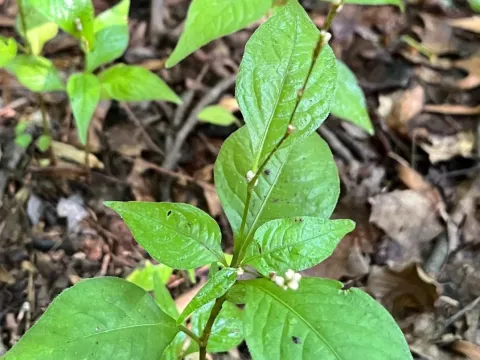
Creeping Smartweed
Polygonum caespitosum
Creeping Smartweed, scientifically known as Persicaria caespitosa, belongs to the Polygonaceae family. In agriculture, it is typically managed as a competitive weed species that requires consistent monitoring within commercial crop fields.
What the section contains
Creeping Smartweed
Seed germination begins in early spring as soil temperatures rise. The plant displays rapid early-season growth, allowing it to establish itself in moist soil environments before many row crops reach full canopy closure.
Strategic tillage and cultivation are essential to disrupt the life cycle of this plant. Early mechanical intervention before the plants flower is the most effective method for long-term population management.
Crop rotation serves as a fundamental agronomic tool against smartweed. By alternating broadleaf crops with grasses, farmers can utilize specific herbicide programs to reduce the seed bank in the soil.
Because the seeds can remain viable in the soil for extended periods, integrated weed management remains the best practice. Success relies on preventing seed set through a combination of timely cultivation and selective herbicide application.
The plant thrives in moist, fertile soils, frequently occupying riparian areas, wetlands, and low-lying parts of agricultural fields. It shows strong adaptability to varying light intensities, ranging from full sun to partial shade.
Water availability is the primary factor driving the growth rate of Creeping Smartweed. While it is highly competitive in moist environments, its growth is significantly restricted in well-drained, dry soils.
Soil texture is less critical than moisture content for this species. It readily colonizes disturbed soil surfaces, making it a common sight in fields that have undergone recent heavy tilling or flooding events.
An optimal pH level for growth ranges from slightly acidic to neutral. High levels of nitrogen in the soil support lush vegetative expansion, enabling the plant to form dense mats that exclude other vegetation.
Proper field drainage is a critical cultural practice to suppress its establishment. Reducing soil moisture levels in low spots significantly limits the weed's ability to outcompete desired crop species.
Creeping Smartweed is susceptible to various fungal pathogens, such as powdery mildew, especially in regions with high humidity and stagnant air. This disease impairs the plant's photosynthetic capacity.
Various insects, including aphids and leaf beetles, are common pests that feed on the foliage of this species. These pests can cause significant leaf deformation and may act as vectors for viruses that spread to neighboring crops.
Rust diseases can infect the stems during periods of excessive rainfall. Monitoring for these symptoms is important, as the weed can serve as a reservoir for pathogens that affect related cultivated plants.
Chemical control focuses on the use of systemic herbicides during the vegetative growth phase. Due to the waxy cuticle on its leaves, the addition of surfactants to herbicide mixtures is often necessary for optimal efficacy.
Cultural methods, such as the use of competitive cover crops, are effective in shading out smartweed seedlings. By maintaining a dense ground cover, farmers can naturally suppress the weed without relying exclusively on synthetic pesticides.