
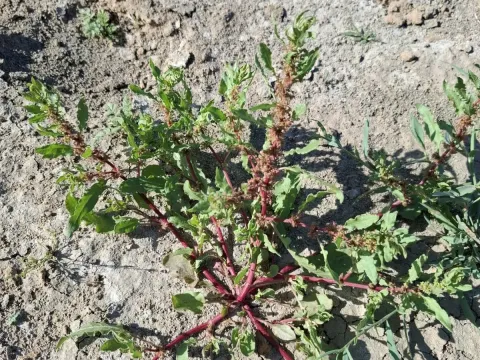
Ukrainian sorrel
Rumex ucranicus
Sowing of Ukrainian sorrel is performed in early spring as soon as the soil warms up to +5...+8°C, which allows the plants to make the most of spring moisture. Summer sowing is also possible, usually carried out in late July or early August to obtain established rosettes by the next season.
What the section contains
Ukrainian sorrel
For winter sowing, the period immediately before the onset of steady cold in October or November is chosen, so that seeds do not germinate before winter begins. This method ensures uniform emergence immediately after snowmelt, when the soil contains the maximum amount of nutrients.
The sowing technology includes embedding seeds at a depth of no more than 1–2 centimeters, which is critical for the small seeds of sorrel. It is recommended to leave a distance of about 20–25 centimeters between rows for ease of maintenance and to ensure sufficient ventilation of the plantings.
After completing the sowing work, it is recommended to slightly compact the soil to improve seed-to-soil contact. In arid conditions, post-sowing irrigation is a prerequisite for achieving uniform and rapid emergence.
If thinning is required at the two- to three-true-leaf stage, a distance of about 5–10 centimeters between specimens should be maintained. This prevents overcrowding, which can cause the development of fungal infections in the future.
Ukrainian sorrel, belonging to the Polygonaceae family, is a herbaceous perennial adapted to temperate climate conditions. The plant prefers well-lit areas, although it can withstand light shading during midday hours.
The best growth indicators are observed in fertile loamy and sandy loam soils with high water-holding capacity. The crop is sensitive to pH levels, preferring slightly acidic or neutral soils, as productivity significantly decreases in alkaline soils.
The culture has high winter hardiness and can withstand significant sub-zero temperatures when covered with a layer of snow. Vegetation resumes very early, as soon as the air temperature begins to stay consistently above zero degrees Celsius.
The plant has specific requirements regarding moisture levels: drought negatively affects the quality of the leaves, making them coarse and less suitable for culinary use. During dry periods, regular irrigation is necessary to maintain the succulence of the green mass.
Good predecessors for sorrel include potatoes, carrots, or cabbage, as they leave the soil relatively free of weeds. The crop is highly sensitive to waterlogging, so areas with high groundwater levels require proper drainage.
One of the most dangerous pests for this crop is the sorrel leaf beetle, which is capable of destroying the entire aerial part of the plant in a short time. Regular inspection of the plantings allows for timely identification of damage and the application of protection measures.
Aphids can also cause significant damage by sucking juices from young leaves and deforming them. An effective method of control is the use of biological agents or washing the plants with plant-based infusions in case of mass infestation.
Among fungal diseases, the greatest threat is powdery mildew, which occurs during sharp temperature fluctuations and high air humidity. Prevention involves maintaining a proper irrigation regime and removing plant debris in the autumn.
Rust manifests as brown spots on the leaves, which significantly reduces the marketability of the harvest. Infected leaves should be immediately removed and disposed of to prevent the spread of spores to healthy parts of the plantation.
If agricultural practices are not followed, particularly in cases of dense planting, root rot may develop. To prevent this problem, timely soil loosening is recommended, ensuring oxygen access to the plant's root system.
Harvesting of Ukrainian sorrel begins when the rosette reaches a marketable size, which usually occurs 40–50 days after emergence. Leaves are cut carefully, taking care not to damage the apical bud located in the center of the bush.
Several selective harvests are carried out during the season as new greens grow. It is important to prevent leaves from overgrowing, as old leaves accumulate excessive amounts of oxalic acid and lose their flavor qualities.
After each mass harvest, it is advisable to fertilize the beds with complex mineral fertilizers and irrigate abundantly. This stimulates the active regrowth of young, tender leaves for subsequent culinary use.
In the autumn, the final leaf cutting should stop 3–4 weeks before the onset of steady frosts. This is necessary for the plants to accumulate enough nutrients in the rhizome to survive the winter successfully.
Harvested produce must be processed or refrigerated immediately, as leaves wilt quickly at room temperature. With proper storage in a refrigerator, sorrel maintains its freshness for several days.