
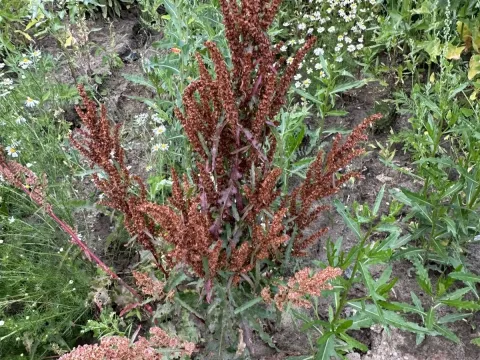
Field dock
Rumex pseudonatronatus
Field dock is a perennial herb that relies heavily on effective seed dispersal mechanisms for population maintenance.
What the section contains
Field dock
Seed germination typically occurs in early spring when soil temperatures reach the appropriate threshold for growth.
The seeds are small and lightweight, facilitating their spread through wind or attachment to animal fur.
In managed environments, the plant exhibits vigorous growth that can lead to rapid establishment if not monitored.
Biological cycle ensures that the plant develops a robust taproot system within the very first growing season.
Belonging to the Polygonaceae family, this plant is well-known for its ability to thrive in saline soil conditions.
It prefers sunny, open habitats where it can maximize photosynthesis without significant competition for light.
The plant is highly adaptable to a variety of soil textures, ranging from sandy loams to heavier, salt-affected clays.
It demonstrates a remarkable tolerance for moisture variability, surviving periods of both drought and waterlogging.
Field dock is often found in meadow ecosystems, roadsides, and disturbed areas across Eurasia and parts of North America.
The species is generally resistant to many common agricultural diseases, maintaining its vigor in harsh environments.
Leaf-feeding beetles are the primary pests that may cause defoliation during the peak of the summer season.
Fungal pathogens causing leaf spots may occur when humidity levels remain excessively high for extended periods.
The plant can act as an alternative host for certain agricultural pests, which is a consideration for land managers.
Despite these threats, the plant remains highly invasive in certain regions due to its aggressive growth pattern.