
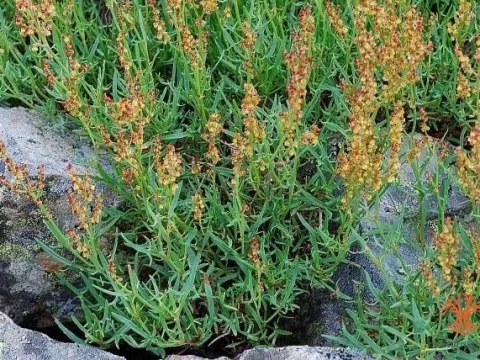
Shrubby dock
Rumex suffruticosus
Rumex suffruticosus, known as shrubby dock, belongs to the Polygonaceae family. This perennial plant is highly regarded for its robust root system and consistent leaf production.
What the section contains
Shrubby dock
Sowing should ideally occur in early spring when the soil temperature consistently reaches 5–7 degrees Celsius, facilitating optimal germination and establishment.
Winter sowing is also an effective strategy, allowing the seeds to undergo natural stratification in the soil, which leads to early sprouting as soon as spring temperatures arrive.
Seeds should be planted in rows spaced 30–40 centimeters apart, with a planting depth of approximately 1.5 to 2 centimeters to ensure adequate soil coverage and aeration.
Compacting the soil surface lightly after planting is recommended to ensure the seeds maintain good contact with the moist earth, which is essential for uniform crop stands.
Shrubby dock thrives in loamy or sandy soils that are rich in organic matter, preferring a slightly acidic to neutral soil pH for maximum nutrient availability.
The plant is moisture-dependent, requiring consistent soil moisture levels to ensure the leaves remain tender and high in quality throughout the growing season.
It demonstrates exceptional hardiness and is capable of surviving significant temperature fluctuations, including harsh winter freezes, without needing special coverage.
An open, sunny location is preferred for cultivation; however, the plant is adaptable and can tolerate partial shade, making it a versatile choice for garden beds.
Soil management includes incorporating compost or well-rotted manure during pre-planting preparation to provide a steady supply of nutrients for this multi-year crop.
The primary economic focus of shrubby dock cultivation is the consistent production of early-season vitamins, provided by the fresh, nutritious leaves.
First-year yields are generally modest as the plant prioritizes building a strong root system, which serves as the foundation for future vigorous growth cycles.
Productivity peaks during the second and third years, provided the grower diligently removes flower stalks to prevent the plant from redirecting energy toward seed production.
Sustainable harvesting involves limiting the number of cuts to 3–4 per season, allowing the foliage to recover fully and maintaining the health of the plant crown.
Maintaining a balanced nutrient profile is vital, as excessive nitrogen may lead to undesirable nitrate accumulation, impacting the quality of the harvested produce.
The dock leaf beetle is a significant threat, often causing severe damage to leaf tissue, which reduces the plant's photosynthetic capacity and total harvestable biomass.
High humidity and poor air circulation often lead to powdery mildew, characterized by a white film on the leaves, which necessitates immediate sanitation measures.
Aphids can become problematic during hot, dry spells, colonizing the undersides of leaves and weakening the plant, which often requires integrated pest management approaches.
Rust diseases are also common, causing brown spots on the foliage that render the leaves unmarketable and require careful removal of affected plant parts to curb spread.
Preventive strategies for disease and pest control include strict crop rotation practices and the regular removal of weeds, which act as secondary hosts for many pathogens.
Harvesting typically begins when the leaves reach a length of 10–15 centimeters, which is usually 40–50 days after the commencement of spring growth.
Leaves should be harvested using a sharp tool, cutting them 3–5 centimeters above the soil level to preserve the crown and ensure continued regrowth.
Harvesting in the cool morning hours is recommended to keep the greens crisp and prevent rapid wilting, which is vital for maintaining high market quality.
Post-harvest handling involves rapid cooling to slow down respiration and moisture loss, followed by careful sorting and packaging for storage or immediate distribution.
The final harvest of the season should be completed well before the first frost, ensuring the plant has enough time to store energy for successful winter dormancy.