
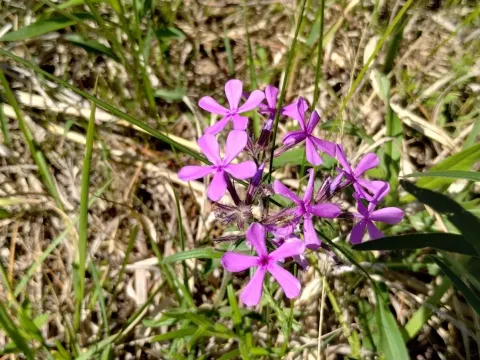
Downy phlox
Phlox pilosa
Downy phlox is typically propagated through division, which allows for the preservation of the parent plant's characteristics. This procedure is best performed in early spring or early autumn when the plant is in a period of relative dormancy.
What the section contains
Downy phlox
Direct sowing into the soil is possible but requires cold stratification for 1-2 months to break seed dormancy. Seeds should be sown in late autumn or early spring into a light, nutrient-rich substrate at a depth of 0.5–1 cm.
When using a seedling method, seeds are started in containers indoors during February or March, keeping the temperature around 20 degrees Celsius. Once true leaves appear, seedlings are thinned or transplanted into individual pots.
Transplanting to the permanent location should take place in late May after the risk of late frosts has passed. Spacing is crucial for this species; plants should be set 30–40 cm apart to ensure good air circulation as they mature.
Regular watering is essential during the first weeks after transplanting to facilitate root establishment. Applying mulch around the base helps retain soil moisture and prevents weeds from competing with the young phlox.
Downy phlox (Phlox pilosa), a member of the Polemoniaceae family, is a perennial herb native to the prairies and open woodlands of North America.
This culture thrives in full sun but can tolerate light shade during the hottest part of the day. It is important to select a site protected from strong winds, as the slender stems can be delicate and susceptible to mechanical damage.
Excellent drainage is a primary requirement for this species. In heavy, clay-based soils prone to waterlogging, the root system is highly susceptible to rot. Ideally, the soil should be sandy or loamy with a neutral to slightly acidic pH.
Moderate but consistent moisture is key to success. While the plant prefers well-drained conditions, it should not be allowed to dry out completely, especially during the active growth and blooming stages.
Fertilization should be limited to twice per season: a balanced nitrogen-rich fertilizer in spring to support foliage development and a potassium-phosphorus fertilizer before flowering to enhance bloom production.
Fungal diseases pose the greatest threat to Downy phlox, particularly in environments with high humidity and poor air circulation around the foliage.
Common issues include powdery mildew, which presents as a white coating on the leaves, and septoria leaf spot, characterized by dark, necrotic lesions. Proper spacing and thinning help significantly in preventing these outbreaks.
Stem nematodes are major pests that can cause stunted growth, twisting, and malformation of the stems. Because treatment is difficult, prevention through crop rotation and the removal of infected plants is the standard approach.
Slugs and snails may feed on tender young leaves during rainy seasons. Utilizing bait stations or physical barriers is an effective way to manage these pests without harming the surrounding beneficial ecosystem.
Early detection is the most important aspect of integrated pest management. Regular monitoring of the foliage allows for timely intervention using appropriate fungicides or insecticides when necessary.