
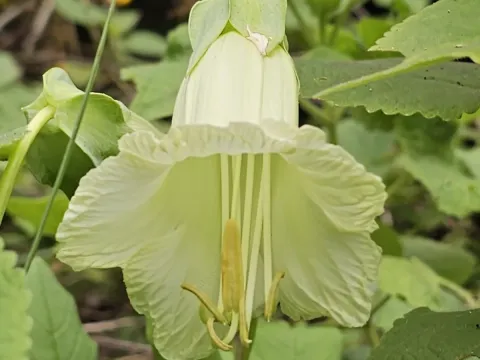
Cobaea pringlei
Cobaea pringlei
Sowing seeds of Cobaea pringlei in temperate climates is recommended for late winter or early spring, typically February or March, to produce strong seedlings.
What the section contains
Cobaea pringlei
The seeds of this crop have a dense outer shell, so it is advisable to soak them in a growth stimulant for a few hours before sowing to significantly improve germination rates.
Seedlings should be grown in individual pots because the plant's root system is sensitive and does not tolerate transplanting or root disturbance during pricking out.
The optimal temperature for seed germination is between 20 and 22 degrees Celsius, and it is crucial to provide bright light immediately after the first shoots appear.
Planting in open ground should only occur once the weather is consistently warm and there is no longer a risk of late spring frosts.
Cobaea pringlei is an ornamental perennial vine belonging to the Polemoniaceae family, which is typically cultivated as an annual in regions with harsh winters.
The crop has high light requirements and prefers sunny, wind-protected sites to ensure vigorous growth and development throughout the season.
The soil for planting must be fertile, loose, and well-drained, as water stagnation at the roots is detrimental to this species.
The plant requires regular watering, especially during dry spells, but it is important to avoid waterlogging and maintain moderate substrate moisture levels.
To support rapid green mass production and bud formation, periodic fertilization with complex mineral fertilizers is necessary throughout the growing period.
The primary pests that can damage Cobaea pringlei under improper growing conditions are aphids and spider mites.
High humidity and poor air circulation can lead to infections such as powdery mildew, which manifests as a white coating on the leaves.
Disease prevention involves maintaining proper airflow and avoiding overcrowded planting, which is critical for the overall health of the vine.
If pests are detected, apply broad-spectrum insecticides or biological control agents according to the product manufacturer's instructions.
Regular inspection of the undersides of the leaves allows for the early detection of infestation sites, preventing the spread of diseases across the entire plant.