
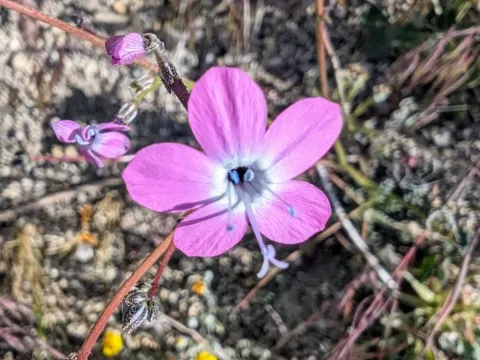
Gilia leptantha
Gilia leptantha
Gilia leptantha is best propagated from seeds sown directly into the prepared garden soil during early spring. Sowing should occur once the danger of severe frost has passed and the soil has started to warm up.
What the section contains
Gilia leptantha
The seeds are exceptionally small and require surface sowing or light covering with a thin layer of fine soil or vermiculite. Light is essential for effective germination, so avoid burying the seeds too deeply.
For earlier blooms, gardeners can start seeds indoors in late winter. Use well-draining seed-starting mix and maintain moderate humidity until emergence, then provide bright light to prevent spindly growth.
When transplanting indoor-grown seedlings, ensure they are hardened off gradually over a week. Plant them in rows with a spacing of about 20 centimeters to allow for proper plant development.
Succession sowing can be practiced if a longer flowering season is desired. However, in regions with very hot summers, spring sowing is generally the most productive method for this species.
Belonging to the Polemoniaceae family, Gilia leptantha is native to the western regions of North America. It thrives in open, sunny environments and is well-adapted to habitats with high solar radiation levels.
The species prefers light, gritty, or sandy soils that offer excellent drainage. It is highly sensitive to waterlogged conditions, which can quickly lead to root rot and failure in growth.
The plant is highly drought-tolerant once established. While regular watering helps maintain vigorous growth during the early stages, mature plants require very little supplemental moisture.
Fertility requirements are minimal. Rich, heavily fertilized soil is often detrimental, leading to soft, weak stems that lack the structural integrity required to hold up the delicate floral clusters.
In landscaping, it is ideally suited for xeriscaping or rock gardens. Its natural growth pattern makes it an excellent choice for sites with poor soil where other ornamental plants struggle to survive.
The most common pests affecting this plant include aphids and spider mites, particularly during periods of intense heat and dry conditions. Regular monitoring is necessary to keep infestations under control.
Fungal issues, such as root rot and stem decay, are primarily associated with excessive irrigation or poor soil drainage. Keeping the area around the base of the plant free of debris is highly recommended.
Powdery mildew can occur if plants are spaced too closely, limiting airflow. Proper thinning of the seedlings to ensure adequate space is a primary cultural method for preventing this fungal disease.
In humid climates, the plants are more prone to foliage spotting. If fungal infections are detected, removing the affected parts of the plant often prevents the need for chemical intervention.
Maintaining a clean garden environment by removing weed competition helps in reducing the stress on the plants, thereby enhancing their natural resistance to common pests and diseases.