
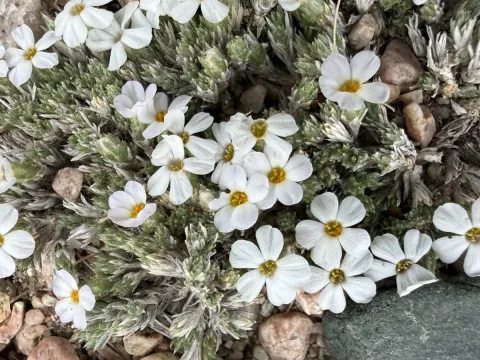
Hood's phlox
Phlox hoodii
Hood's phlox (Phlox hoodii) is a perennial, low-growing herb belonging to the Polemoniaceae family. It is native to the arid prairie regions and rocky slopes of North America, where it has evolved to thrive in nutrient-poor, harsh environments.
What the section contains
Hood's phlox
Botanically, it forms dense, cushion-like mats consisting of small, scale-like leaves. These cushions are exceptionally resilient, providing the plant with protection against strong winds and cold, while supporting a profusion of delicate flowers during the spring bloom.
The cultivation of this species requires a location with full, unobstructed sun exposure. As a xeric plant, it is highly adapted to dry conditions and will suffer significantly if grown in rich, moisture-retentive soils or shaded environments.
The ideal substrate for this plant is a well-draining, sandy, or rocky soil mixture. Drainage is the most critical factor for success; the soil must never remain waterlogged, as this leads to root decay and rapid loss of the specimen.
Hood's phlox is highly cold-hardy and can withstand significant temperature fluctuations, making it an excellent choice for alpine gardens, rockeries, and xeriscaping projects where extreme durability is required.
Root rot is the most common threat to Hood's phlox, typically resulting from poor soil drainage or excessive irrigation. Maintaining a dry, well-aerated root zone is essential to prevent fungal pathogens from colonizing the plant tissue.
Powdery mildew may occur if air circulation is insufficient. To mitigate this risk, it is recommended to space plants properly and ensure they are planted in open areas where the wind can easily dry the foliage after rainfall.
Spider mites are the primary pest concern during periods of prolonged heat and drought. These small pests colonize the cushions, leading to leaf yellowing and general decline if left untreated with appropriate miticides.
Nematodes can attack the root system, causing stunted growth and poor health. Ensuring that the planting site is free from contaminated soil is the primary method of prevention, as treatment for established plants can be difficult.
Vigilance is key to maintaining a healthy population of Hood's phlox. Regular scouting for signs of pests or disease during the active growing season allows for early intervention and ensures the long-term viability of the plants.