
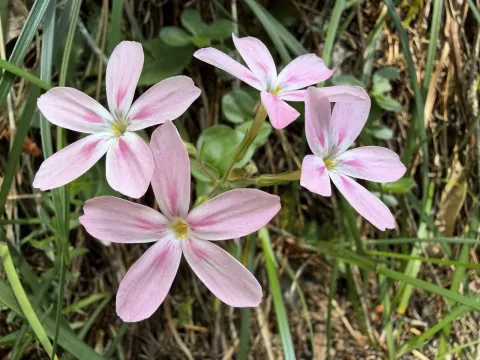
Phlox adsurgens
Phlox adsurgens
Phlox adsurgens, commonly known as the trailing phlox, belongs to the Polemoniaceae family and is a resilient perennial native to the mountains of Oregon and California.
What the section contains
Phlox adsurgens
The most reliable method of propagation is division of the root clumps, which is best performed in the early spring as new growth begins to emerge from the soil.
Seed propagation requires a period of cold stratification, making late autumn the ideal time to sow seeds directly into pots or a prepared garden nursery bed.
When planting, ensure that segments are placed at a shallow depth, roughly 2 to 5 centimeters, to encourage proper root establishment without suffocating the crown.
Spreading stems should be encouraged to make contact with moist soil; this helps the plant expand its footprint and strengthens the overall vigor of the groundcover.
This species thrives in dappled shade and cool forest-like environments, mimicking its natural habitat in the Pacific Northwest of the United States.
Soil conditions must prioritize excellent drainage; the plant prefers a humus-rich, slightly acidic medium that retains moisture without becoming waterlogged.
While the plant is quite hardy, it requires consistent moisture during the growing season, especially during hot, dry spells that can stress the foliage.
Mulching is essential for Phlox adsurgens, as it helps regulate soil temperature and keeps the shallow root system cool throughout the warm summer months.
Exposure to full, intense afternoon sun should be avoided, as it often leads to leaf scorch and premature wilting, significantly reducing the plant's aesthetic value.
Powdery mildew is the most prevalent fungal disease, particularly when there is poor air circulation or when the plant is subjected to high humidity levels.
Root rot is a major threat in heavy, clay-based soils that do not drain effectively, often leading to sudden collapse of the stems during the peak growing phase.
Slugs and snails are notorious garden pests that find the succulent foliage of Phlox adsurgens highly palatable and can cause significant cosmetic damage.
Nematode infestations can manifest as stunted growth and distorted stems, requiring careful monitoring and the removal of affected plant parts to stop the spread.
Maintenance hygiene, such as clearing debris from around the base and ensuring proper spacing between plants, is the primary defense against these biological threats.