
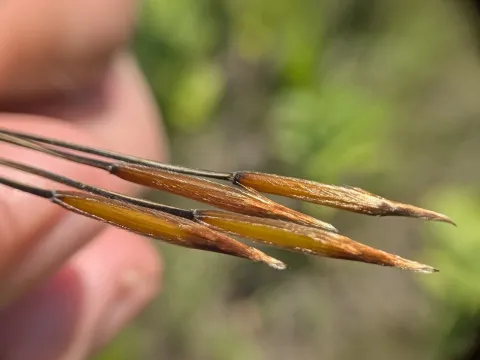
Porcupine grass
Stipa spartea
Porcupine grass (Stipa spartea) is a perennial bunchgrass belonging to the Poaceae family. It is best sown in the spring, once soil temperatures are sufficient to promote consistent germination and initial establishment.
What the section contains
Porcupine grass
The seeds possess a unique awn that can bury itself in the soil, but in agricultural settings, shallow sowing at a depth of 1–2 centimeters is recommended to ensure even development.
A well-prepared seedbed is essential for this species. It should be firm to maintain adequate moisture contact, as the seeds require steady moisture during the initial weeks of germination.
Drill seeding is generally preferred, with row spacings of about 20 centimeters. This provides enough space for individual plants to develop their robust root systems without excessive competition.
Controlling weeds during the establishment year is crucial. Since the grass develops slowly, competitive annual weeds can easily overwhelm young seedlings if not managed through mechanical or manual methods.
This species is highly adapted to drought-prone environments. It thrives in open, sunny locations where other grasses might suffer during prolonged dry spells.
Stipa spartea is not overly demanding regarding soil fertility. It performs well on sandy to loamy soils, provided they offer excellent drainage, as waterlogged conditions are highly detrimental.
The grass prefers a neutral to slightly alkaline soil pH, typical of its native prairie habitat. Its deep root system allows it to access subsoil moisture, ensuring survival in arid regions.
It displays remarkable resilience to high temperatures and exposure, making it an excellent candidate for restoration projects in areas prone to heat stress.
The plant is fire-adapted; controlled burning is often used in management to remove accumulated thatch and stimulate fresh spring growth.
Porcupine grass is primarily utilized as a component of native pastures and hay fields. While it does not offer the high-volume yield of improved commercial grasses, it provides stable forage during dry seasons.
Harvesting for hay must occur before the seedheads fully mature. The seeds have sharp, needle-like awns that can cause mechanical injuries to the mouths and skin of livestock if ingested.
It typically yields one significant harvest per season. Managed grazing is the most common use, provided the intensity is monitored to protect the growing points of the bunchgrass.
In addition to forage, it serves a critical role in erosion control. Its dense root network stabilizes soil on slopes and prevents wind erosion in open fields.
The nutritional value is moderate. When supplemented with other species in a pasture mix, it provides a reliable, drought-tolerant base for animal production.
Rust and various leaf spot diseases can occur under humid conditions, potentially reducing the overall quality of the forage if they spread significantly.
Grass-feeding insects, such as aphids or plant bugs, can cause minor localized damage. However, the species is generally hardy and rarely requires intensive pesticide intervention.
The accumulation of thick thatch layers can create a microclimate favorable for pathogens and pests, which is why periodic management is essential.
Overgrazing is the greatest threat to the longevity of the plant. Constant pressure prevents the grass from storing enough energy in its roots to survive the winter.
Proper field maintenance, including timely mowing or prescribed burning, is the best strategy to mitigate threats and ensure the health of the stand.