
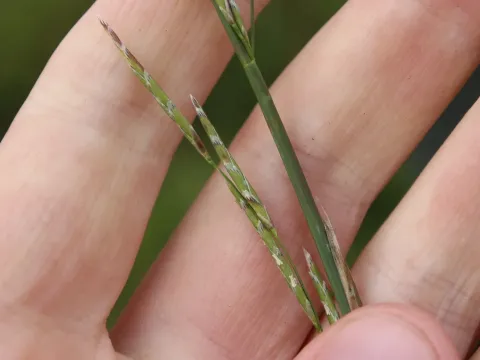
Procumbent sweetgrass
Glyceria declinata
Procumbent sweetgrass is a perennial herbaceous plant belonging to the Poaceae family. In nature, it reproduces primarily through seeds that thrive in moist environments and germinate easily when water levels are high.
What the section contains
Procumbent sweetgrass
When cultivating this species, spring seeding is recommended, coinciding with the period of peak soil moisture. Seeds should be sown shallowly, at a depth of 0.5 to 1 cm, as they require light and constant humidity to successfully initiate the germination process.
Vegetative propagation via root division or sod transplanting is also a highly effective strategy. This approach allows for rapid coverage of waterlogged areas or riparian zones, ensuring a uniform stand of grass within a short timeframe.
Maintaining constant soil moisture is the primary factor for successful seedling establishment. During the first few weeks, the plants are sensitive to surface drying, which necessitates careful monitoring and potentially light supplemental irrigation.
Seeding rates should be adjusted based on the intended use of the site, whether for pasture or hay production. A denser initial stand helps the crop outcompete opportunistic weeds typically found in wet habitats.
This species is a true hydrophyte and is extremely demanding regarding water availability. It is optimally suited for lowland meadows, floodplains, and the immediate vicinity of natural water bodies where the water table remains high year-round.
The plant thrives in fertile alluvial or peaty soils. A rich organic matter content in the soil profile supports robust root development and rapid accumulation of vegetative biomass throughout the growing season.
The ideal pH range for procumbent sweetgrass is slightly acidic to neutral. The plant demonstrates remarkable resilience to periodic inundation, making it a valuable candidate for land reclamation and greening of wetland areas.
The species prefers a temperate climate and is well-adapted to moderate temperature fluctuations. It exhibits excellent winter hardiness, allowing it to survive extreme conditions provided there is sufficient cover.
Drought stress is detrimental to procumbent sweetgrass. If the water table drops significantly, the plant's productivity declines, its leaves lose their tenderness, and the grass may become stunted or enter dormancy.
The yield of green matter is heavily dependent on moisture availability throughout the growing cycle. Under optimal conditions, this grass forms dense, lush stands that provide a significant quantity of high-quality forage.
One of the key advantages of this species is its rapid regrowth after mowing. In high-moisture environments, multiple cuts can be achieved in a single season, maintaining consistent productivity for livestock feed.
The nutritional value is considered high, especially during the pre-flowering phase when the protein content is at its peak. Livestock, particularly cattle, find the grass palatable both as fresh forage and as processed silage.
As a pasture plant, procumbent sweetgrass is capable of withstanding moderate grazing pressure on wet sites. Its growth habit allows it to maintain forage availability even in conditions that might suppress other less moisture-tolerant species.
To maximize yields, it is important to manage the species composition of the meadow. Preventing the encroachment of invasive sedges and other wetland weeds is necessary to maintain the dominance of the sweetgrass and ensure high dry matter output.
Fungal diseases, such as grass rust, can affect the leaves of procumbent sweetgrass, particularly in warm and humid weather. This can diminish the photosynthetic capacity of the plant and lower the overall nutritional value of the forage.
Cereal flies and aphids can act as pests, attacking the young stems and tillers during periods of rapid growth. This can stunt the plant and lead to a reduction in total biomass harvest if left unmanaged.
Root rot is a potential risk in areas with poor drainage or where water becomes stagnant during cooler temperatures. This weakens the plants, making them more susceptible to other environmental stressors.
Slugs and snails, common inhabitants of moist habitats, can cause significant damage to young seedlings. Their activity is often high in damp weather, which can lead to thinning of the stand in newly planted areas.
Integrated management practices, including proper water flow regulation and periodic monitoring, are essential for disease control. Chemical applications should be avoided or minimized due to the proximity of the crop to water bodies.
The harvest timing is determined by the development stage of the plant, ideally coinciding with the onset of flowering. Harvesting at this time ensures the best balance between biomass quantity and protein quality.
Mowing should ideally occur before seed shedding begins. This preserves the nutritional density of the stems and encourages the plant to direct its energy towards regrowth for the next harvest cycle.
Hay production can be challenging due to the inherent humidity of the growing site, often requiring significant labor for proper curing. Consequently, ensiling is frequently the preferred method for long-term storage.
Using specialized machinery designed for wet, soft ground is critical to avoid compaction and sod destruction. Minimizing deep tire ruts is essential to protect the root system and ensure future regrowth.
Post-harvest care involves nutrient management. Targeted application of fertilizers, particularly nitrogen, after the first cut stimulates tillering and helps the plant recover quickly for subsequent production cycles.