
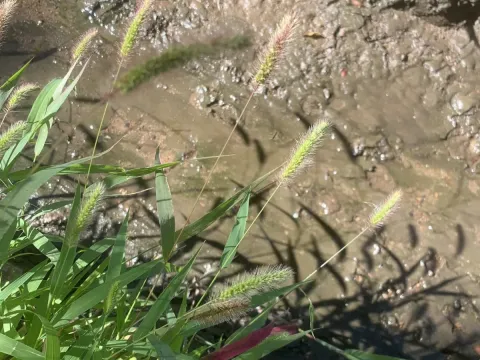
Dense-spiked bristle grass
Setaria pycnocoma
Dense-spiked bristle grass is a warm-season crop that requires soil to be thoroughly warmed before planting, as it is highly sensitive to spring frosts.
What the section contains
Dense-spiked bristle grass
The ideal planting window typically falls in late May to early June, once soil temperatures at seeding depth reach at least +12 to +15 degrees Celsius.
Seeding rates are generally between 10 and 15 kilograms per hectare, depending on soil preparation and the desired density of the forage stand.
Given the small size of the seeds, they must be planted at a shallow depth of 2–3 centimeters to ensure they have enough energy to emerge through the soil surface.
Under favorable moisture conditions, seedlings typically emerge within 7–10 days, establishing a root system that allows for rapid development in the warm summer months.
This grass thrives in full sunlight and high-temperature environments, making it a perfect fit for open field cultivation without significant shading from taller crops.
It adapts well to various soil textures, but the highest biomass yields are obtained on fertile, well-draining loamy soils with a near-neutral pH level.
The species exhibits impressive drought tolerance; however, supplemental irrigation during the critical tillering and heading phases can drastically increase forage quality.
Good soil aeration is mandatory, as this crop does not tolerate waterlogging, which can lead to root rot and poor stand establishment in heavy clay environments.
Integrating it into crop rotations serves as an excellent way to improve soil structure due to its extensive fibrous root system that adds organic matter to the soil.
The biomass yield of Setaria pycnocoma is highly dependent on nitrogen availability, moisture management, and the specific agro-climatic conditions of the growing season.
Under optimal agronomic management, including moderate fertilization, farmers can achieve yields ranging from 20 to 25 tons of green forage per hectare.
When harvested as hay, yields typically range from 5 to 8 tons per hectare, providing a high-quality, palatable feed option for various types of livestock.
Primary drivers of production efficiency include:
- adequate nitrogen supply;
- proper stand density;
- effective weed control during the establishment phase.
Its high tillering capacity ensures rapid canopy closure, which not only maximizes light interception but also helps suppress competing annual weeds.
Early-stage seedling development is often vulnerable to cereal flies, which can damage the growing points and reduce overall plant population density if left unchecked.
Smut diseases are common threats to many grass species, including bristle grasses, necessitating the use of certified, treated seeds to minimize field infection rates.
High humidity and poor air circulation within the field can promote leaf spot diseases, which diminish the photosynthetic capacity and quality of the forage.
Proactive insect management during the first few weeks after emergence is recommended to protect the stand until the plants are vigorous enough to outgrow pest pressure.
Field sanitation and strict adherence to crop rotation cycles are essential strategies to reduce the buildup of soil-borne pathogens and long-term pest pressure.
For high-quality silage or green forage, harvesting should occur at the onset of the heading stage, before the stalks become lignified and lose their digestibility.
Delaying the harvest results in an increase in fiber content, which significantly lowers the nutritional value and makes the forage less appealing to grazing animals.
Mechanical tedding is often employed during the hay-making process to ensure uniform drying and prevent mold development in the stored forage bales.
In cases where the crop is grown for seed, harvesting is timed to coincide with the physiological maturity of the grain, characterized by seed hardening and color change.
Post-harvest storage requires careful moisture monitoring to maintain seed viability and prevent the heating of forage stacks, ensuring a stable feed supply.