
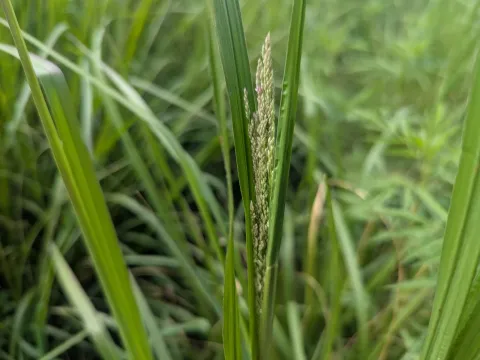
Dense panicum
Panicum condensum
Dense panicum is a warm-season crop, requiring soil temperatures to reach at least 12–15 degrees Celsius before planting begins. The optimal sowing time is late spring, once the threat of frost has completely passed for the season.
What the section contains
Dense panicum
Seeding rates typically range from 10 to 15 kilograms per hectare, depending on local soil fertility and the intended use of the harvest. Seeds should be planted at a shallow depth of 3–4 centimeters to ensure consistent and rapid emergence of seedlings.
Field rolling after sowing is a highly recommended practice to ensure good seed-to-soil contact. This helps maintain moisture levels around the seeds, which is vital for achieving uniform plant stands in arid growing conditions.
A row spacing of 15–20 centimeters is considered ideal for this crop. This configuration provides the necessary space for root and shoot development while allowing for efficient field maintenance and weed control throughout the early vegetative stages.
In regions with shorter growing seasons, selecting early-maturing varieties is essential for success. This ensures the plants complete their biological cycle before autumn temperatures decline, maximizing the nutrient content of the biomass.
As a heat-loving grass species, dense panicum thrives in environments with temperatures ranging from 22 to 28 degrees Celsius. It requires steady warmth to reach its full physiological potential during the growing season.
The crop is adaptable to various soil types, performing best in well-drained sandy loams or loamy soils. Its deep root system provides a notable level of drought tolerance, allowing the plants to survive periods of limited rainfall.
Adequate sunlight is fundamental for the growth of this crop. Areas with significant shading will result in stunted plants, weak stems, and lower biomass yields, which in turn reduces the nutritional value of the forage produced.
Soil pH levels should ideally be maintained between 6.0 and 7.0 for optimal nutrient uptake. On acidic soils, liming is recommended to prevent the toxic effects of aluminum and manganese, which can severely hinder root development.
Balanced fertilization is key to high yields. Nitrogen application during the active growth phase significantly boosts foliage production, while phosphorus and potassium ensure strong roots and overall plant resilience against environmental stress.
Yield capacity for dense panicum varies depending on climatic factors and the management intensity of the farm. With proper irrigation and favorable conditions, this crop can produce a significant volume of dry matter per hectare.
The ability to regrow after harvesting allows for multiple cuts per season, typically 2 to 3 depending on the length of the growing period. This frequency is a major advantage for livestock producers aiming for constant forage supply.
Harvest timing significantly impacts the nutritional quality of the yield. Cutting before the heading phase is generally recommended, as this is when the plants contain the highest concentration of digestible proteins and sugars.
Selecting improved cultivars can lead to substantial yield increases, often outperforming wild-type populations. However, farm managers must balance density with resource availability to prevent individual plants from competing for limited nutrients.
Accurate yield assessment is conducted by measuring the dry matter content of the harvested samples. This data is critical for fine-tuning subsequent planting densities and fertilizer programs to achieve consistent farm-wide results.
Root rot is a common threat, particularly in soils that suffer from compaction or poor drainage. Managing soil structure and crop rotation are the most effective strategies for minimizing the prevalence of these fungal pathogens.
Leaf spot diseases may emerge during periods of prolonged high humidity. These infections reduce the plant's photosynthetic capacity, leading to decreased yields and lowered energy content in the harvested fodder.
Insect pests like aphids and grass-feeding flies can be problematic, especially for younger plants. Frequent monitoring is necessary to determine if intervention is needed to protect the stand from significant damage.
Weed competition can significantly reduce crop yields in the early stages of development. Implementing pre-emergence harrowing and timely inter-row cultivation helps maintain a clean field without relying solely on chemical herbicides.
Fungicidal seed treatments offer a robust first line of defense against soil-borne pathogens. Integrating these treatments into the standard planting routine helps establish a healthy crop and reduces the need for mid-season chemical applications.
Harvesting at the peak of nutritional value is critical. Experts recommend targeting the flowering stage or just before, as this ensures the ideal ratio of fiber to protein, making the forage highly palatable for livestock.
For hay production, the cut material should be allowed to dry in windrows within the field. This gentle curing process preserves the structural integrity and nutritional profile of the leaves and stems.
Silage production requires specialized machinery to chop the crop into uniform pieces. Effective compaction and sealing in airtight silos are necessary to promote the lactic acid fermentation required for long-term storage.
Leaving a stubble height of at least 10 centimeters is vital to protect the growing points of the plant. This practice supports faster regrowth and ensures the longevity of the crop stand over multiple seasons.
Efficiency during harvest is essential, requiring the use of wide-swath mowers to complete the task within the optimal window. Rapid processing minimizes the risk of nutrient degradation caused by weather exposure after cutting.