
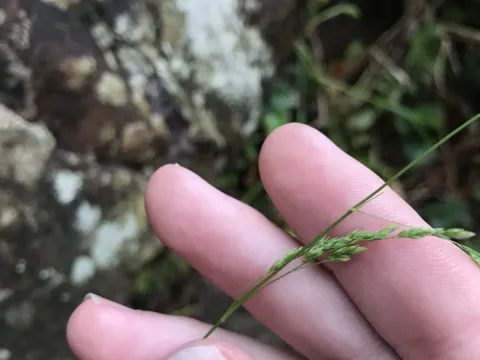
White-tipped bluegrass
Poa acroleuca
Poa acroleuca, commonly known as white-tipped bluegrass, is a perennial grass species belonging to the Poaceae family. It is native to East Asia, primarily documented in regions across Russia's Far East, Japan, China, and the Korean Peninsula, where it thrives in diverse moisture-rich environments.
What the section contains
White-tipped bluegrass
This grass species typically inhabits moist meadows, forest margins, and riparian zones. Its preference for high soil moisture content makes it a crucial botanical component in lowland vegetation, where it contributes to the stabilization of soil and natural water retention.
Botanically, the plant features panicle-type inflorescences with distinctive whitish tips on the spikelets, providing the inspiration for its common name. The stems typically range in height from 20 to 50 cm, growing in small tufts or loose clusters that maintain productivity throughout the vegetative phase.
Regarding climatic requirements, Poa acroleuca is well-adapted to temperate and cold regions, showing significant cold tolerance during winter months. It prefers soils that are nutrient-rich and consistently moist, avoiding environments prone to extreme drought or heat stress.
The agricultural application of this species is largely centered on its role as forage for livestock. It is valued for its nutritional profile in early growth stages, serving as a reliable component of wild-grown pasture lands that support local grazing systems in its native geographic range.