
Wild rye
Secale sylvestre
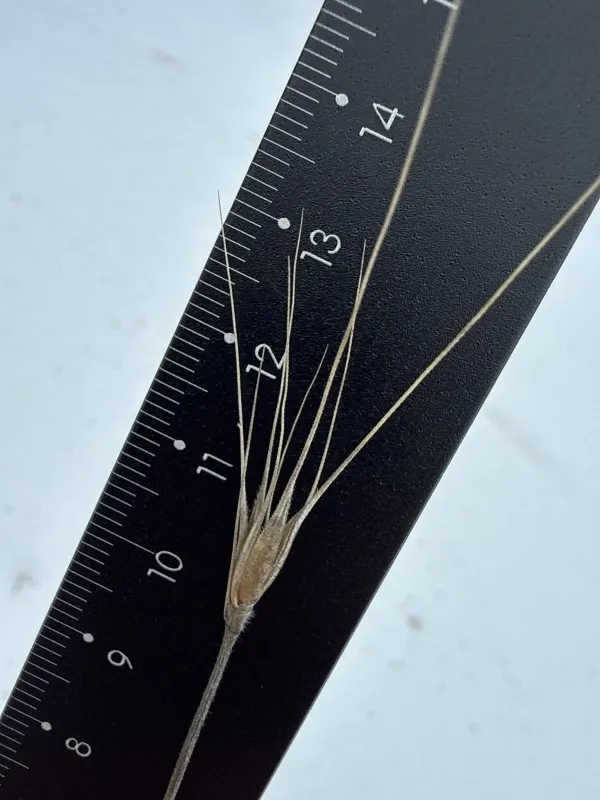
Description
Growing requirements
Wild rye (Secale sylvestre) is a member of the Poaceae family, known for its significant adaptability to harsh environmental conditions. It is specifically adapted to sandy and gravelly soils where nutrient levels are often insufficient for commercial cereals.
The plant requires full sun exposure for normal growth. It does not tolerate shade or high competition from taller vegetation, which is why it typically thrives in open slopes, meadows, and disturbed lands with minimal canopy cover.
Secale sylvestre is highly valued for its exceptional drought tolerance. Its root system is exceptionally deep and efficient, allowing the plant to sustain metabolic functions even during extended periods of moisture deficit in the soil profile.
Regarding climate, this species shows excellent hardiness. It is well-adapted to the continental climates found in Eastern Europe and Central Asia, effectively surviving winter dormancy and resisting sudden temperature fluctuations in early spring.
The soil structure should be well-drained, as the species is highly sensitive to waterlogging. It performs best in soils with neutral to slightly alkaline pH levels, reflecting its evolutionary preference for calcareous and mineral-rich steppe substrates.
Main diseases and pests
Like other Secale species, wild rye is susceptible to powdery mildew during periods of excessive atmospheric humidity. This fungal pathogen forms characteristic white patches on the foliage, which can inhibit plant health if left unmanaged.
Rust diseases, including leaf rust and stem rust, are common threats in regions with high humidity during the grain-filling stages. These diseases damage the photosynthetic surface area and decrease the overall plant vigor.
Insect pests such as cereal flies pose a threat to young seedlings in the early vegetative stages. The larvae feed on the developing stems, often causing the central leaf to wither and the plant to suffer stunted development.
During the maturation phase, various species of grain beetles and shield bugs may attack the developing ears. These insects feed on the endosperm, which can significantly lower the quality and viability of the harvested seeds.
The species generally maintains a robust immune system compared to domesticated varieties, often resisting minor infections. Integrated pest management, focusing on early planting dates and field sanitation, is usually sufficient to mitigate these threats.
Harvesting
The harvest period for Secale sylvestre occurs in mid-to-late summer, depending on the latitude and local heat summation. Unlike commercial rye, the seeds of wild rye are prone to shattering as they reach full maturity.
Because of the natural shattering characteristic, timing is critical. Harvesting must be initiated as soon as the grain reaches wax maturity to ensure that seeds are captured before they disperse into the environment.
The manual or mechanical collection involves cutting the stalks carefully to avoid excessive vibration. Gentle handling is necessary because the glumes are relatively loose, and the grain can easily be lost during movement.
Post-harvest processing involves threshing and cleaning the grain to remove awns and glume fragments. Due to the small size of the seeds compared to cultivated rye, specialized sieves are required for efficient separation.
Storage of the cleaned grain must be done in a cool, dry environment to maintain high germination rates. Proper moisture control is essential to prevent fungal contamination, which is a major risk for seeds with high physiological activity.