
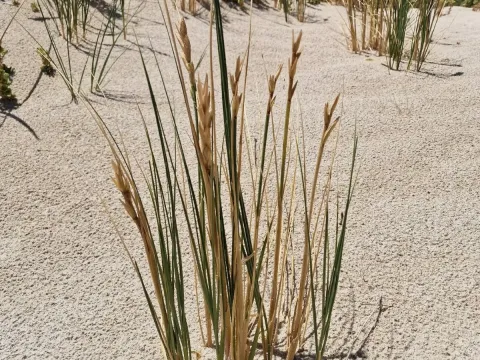
Wheatgrass (Thinopyrum)
Thinopyrum
Sowing of Thinopyrum is recommended in early spring as soon as the soil becomes physically workable. The optimal temperature for seed germination is between +5 and +8 °C, which allows the crop to utilize soil moisture from snowmelt effectively.
What the section contains


Wheatgrass (Thinopyrum)
Late autumn sowing is also permissible, often resulting in more uniform seedlings in the following spring. It is crucial to monitor the seeding depth: on light soils, it should be 3–4 cm, while on heavier soils, 2–3 cm is ideal.
The seeding rate depends on regional moisture conditions, averaging 10–15 kg per hectare for standard row planting. Thinopyrum is characterized by high germination energy, facilitating good coverage of the sward.
To establish long-term pastures or hayfields, the culture is often sown in mixtures with legumes such as alfalfa or sainfoin. This helps balance the nutritional value of the final forage product.
During soil preparation, it is essential to perform thorough weed control, especially against deep-rooted perennials. Sowing should be carried out on a well-leveled seedbed to ensure uniform distribution.
Thinopyrum is a highly plastic crop capable of growing on saline and dry soils where other grass species lose productivity. It is excellently adapted to continental climate conditions.
The crop has moderate fertility requirements, preferring structural chernozem or chestnut soils. However, due to its robust root system, it can withstand short-term drought conditions successfully.
The plant exhibits high salt tolerance, making it indispensable for reclaiming degraded or saline lands. It develops successfully in conditions where the groundwater level is deep.
Optimal growth requires good lighting and soil aeration. Thinopyrum is highly sensitive to waterlogging; therefore, areas prone to prolonged flooding are not suitable for its cultivation.
In regions with harsh winters, Thinopyrum demonstrates high frost resistance, maintaining vegetative buds even under low soil temperatures during the winter period.
The yield of green mass of Thinopyrum can vary from 15 to 30 tons per hectare, depending on the level of agronomy and precipitation. Yields increase significantly with irrigation.
Hay harvest under two-cut management ranges from 5 to 8 tons per hectare. The crop is characterized by high leafiness, which has a positive impact on the quality of the resulting fodder.
A biological feature of the plant is its rapid regrowth after mowing. This allows for stable harvests over 5–7 years of using the stands.
When grown for seeds, the yield is approximately 0.4–0.8 tons per hectare. For high yields, it is important to apply nitrogen fertilizers in early spring.
Maximum productivity is observed in the third year after sowing, after which proper care is required to maintain stand density and prevent crop thinning.
The most common diseases of Thinopyrum are various types of rust, which appear during excessive humidity and in dense stands, reducing the quality of the green mass.
Powdery mildew also attacks the crops in warm and humid weather, covering leaves with a white film that impairs photosynthesis and slows plant growth.
Among pests, cereal flies and grain beetles pose the greatest threat, as they damage generative organs and reduce the seed productivity of the culture.
Aphid damage can be significant in dry years, as insects suck sap from young shoots. This leads to plant deformation and slows down overall development.
To control diseases and pests, it is recommended to follow crop rotation, mow the sward in a timely manner, and apply authorized fungicides or insecticides when the economic threshold is exceeded.
Harvesting for hay is performed at the heading stage, before flowering begins. This ensures an optimal protein-to-fiber ratio, which is essential for balanced livestock nutrition.
When used for green fodder, mowing begins at the jointing stage. Regular mowing stimulates tillering and the formation of a dense, high-quality sward.
For seed production, harvesting is done by swathing when the spike turns brown. It is important to complete the process before the natural shedding of seeds, which is common in many grasses.
Post-harvest processing of seeds includes drying and cleaning using seed-cleaning machinery. Proper storage of seed material ensures high germination in the following season.
To maintain soil fertility and stand longevity after harvest, it is recommended to apply mineral fertilizers and perform light harrowing to stimulate further vegetation.