
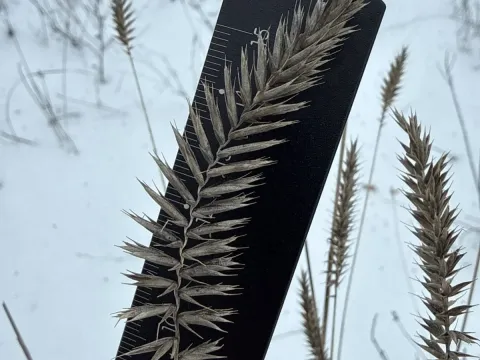
Wheatgrass
Agropyron Gaertn. x Thinopyrum Á. Löve
The optimal time for sowing wheatgrass is early spring or during the late autumn period when the soil is moisture-rich. In steppe regions, early spring sowing is preferred as the crop requires stable moisture for successful seed germination and root system development.
What the section contains

Wheatgrass
The seeding rate depends on the method of sowing and the intended use of the crop. For hay production, standard row seeding is usually applied, while for pasture creation or seed cultivation, wide-row methods with row spacing up to 45–60 centimeters are practiced.
Sowing depth is directly dependent on the soil texture. In light sandy soils, seeds are sown at a depth of up to 3–4 centimeters, whereas in heavier soils, it should not exceed 2–3 centimeters to ensure smooth emergence.
A crucial condition is the thorough preparation of the seedbed. The soil should be leveled and compacted, as small wheatgrass seeds require maximum contact with moist soil for uniform germination.
Wheatgrass has high germination energy, though the crop develops relatively slowly in the first year. The main development and tillering occur in the second and subsequent years of life, which makes it a very durable and long-lasting crop.
Wheatgrass belongs to the Poaceae family and is one of the most drought-resistant forage crops. It adapts perfectly to dry steppe and semi-desert conditions, withstanding long periods without precipitation.
The crop is extremely undemanding regarding soil fertility and can grow on chestnut, chernozem, and even saline soils. However, wheatgrass shows its best productivity on light sandy loam and loamy soils with good drainage.
The plant has high frost resistance and can survive harsh winters with low temperatures even without snow cover. This quality makes it an indispensable component of grass mixtures in regions with sharply continental climates.
An important requirement is the absence of water stagnation in the soil. Despite its need for water during the emergence phase, adult plants react very negatively to prolonged flooding, which can lead to stand failure.
Wheatgrass shows a high response to nitrogen fertilizers, especially in the first years of growth. Applying mineral fertilizers significantly increases the yield of green mass and seeds even on poor-quality soils.
The green mass yield of wheatgrass varies depending on moisture conditions and the age of the stand. In favorable years with sufficient rainfall, one can expect 15–25 centners of hay per hectare under extensive farming conditions.
When using intensive cultivation technologies and timely fertilization, yield indicators can be significantly higher. On irrigated plots, the crop's productivity increases two to three times compared to rain-fed conditions.
Yield stability is one of the main characteristics of wheatgrass. Even in dry years when other grass species perish, wheatgrass retains its vitality and provides a guaranteed, albeit moderate, yield of nutritious feed.
The seed productivity of the crop is also quite high. With proper care of seed-production fields, one can harvest 3 to 6 centners of high-quality seeds per hectare, making the crop economically viable.
The longevity of the stand allows fields to be used for 10–15 years without the need for reseeding. This reduces the costs of annual tillage and sowing operations, ensuring a stable output of production.
The main diseases of wheatgrass include various types of smut, which can significantly reduce the quality and quantity of seed harvest. To combat these, seed treatment with fungicidal preparations before sowing is employed.
Rust is also a serious threat in years with high humidity. Infection of leaves leads to a decrease in the nutritional value of green mass and the premature death of the plant's assimilation surface.
Among pests, cereal flies and grain beetles pose the greatest danger as they damage the plant's generative organs. In cases of mass outbreaks, chemical treatment of crops with insecticides during the shooting phase is necessary.
The meadow moth can cause significant damage to wheatgrass crops during population outbreaks by eating vegetative mass. Monitoring pest populations allows for timely protective measures to save the harvest.
Improper grazing regimes or delaying hay mowing can weaken plants, making them more vulnerable to pathogens. Adhering to optimal mowing times and creating conditions for stand recovery is the best disease prevention.
The timing of wheatgrass harvest for hay is determined by the heading phase, as the plant retains its maximum protein and fiber content at this time. Delaying the harvest leads to stem coarsening and a sharp decline in feed palatability.
For seed harvesting, the process is conducted when the spikes turn yellow and the seeds reach the waxy ripeness stage. It is crucial to prevent seed shattering, as wheatgrass is prone to uneven spike ripening.
For seed production, a two-stage harvesting method is practiced. First, crops are mowed into windrows where seeds continue to ripen, and then, after 3–5 days, the windrows are gathered and threshed with combines.
For forage purposes, wheatgrass is mowed using mowers, followed by tedding to accelerate the drying process. In hot climates, hay dries quickly, which helps in preserving high-quality forage.
After harvest, it is important to perform post-harvest harrowing of the fields. This helps remove dead residues, improves soil aeration, and stimulates plant tillering, which positively affects the yield of the following year.